MARY CANALES – Ice Cream Maker

Oakland Magazine – Nov. 07
MARY CANALES KNOWS THE SWEET SMELL OF SUCCESS. Just a year after leaving a high profile job as a pastry chef at Chez Panisse, her new shop, Ici, is raising the bar for gourmet ice cream, sorbet and sherbet in the Elmwood. It’s no wonder, with eclectic flavors like lemon and gingersnap, handmade cones and ice cream sandwiches and hand-dipped vanilla and chicory bonbons.

mary_canales

Where do you get the ideas for your flavors?
First of all, I definitely follow the seasons, so what’s growing is really what inspires me. I mean, literally, I have to park a little bit away from the shop, and I’m always aware of what’s growing in people’s yards—their gardens. You know, there are apples ripening now and the fennel seeds, the pollen on the ends—you can’t help but notice, it’s all around you. Not that I’m going to go into people’s yards, but you see what’s growing, what’s seasonal.

Apples? Fennel? Those seem like awfully healthy ingredients for ice cream. Don’t tell me you use basil too.
As a matter of fact, we made basil ice cream here not long ago … really just inspired because at the farmers market there were these huge bunches of basil next to the peaches I was buying. I thought it might be interesting, and it does go with the fruit flavors. You can have a scoop of basil and a scoop of plum and it’s really good.

You must have some colorful dreams at night.

I remember as a kid, dreaming about blueberry pancakes and having to have them or wanting to learn how to make them. Before Christmas, I did dream that I wanted to make a frozen bûche de Noël. It’s crazy, but I figured out how to make them in my dream, and I made them all night. I woke up exhausted.

Does your staff have input into your flavors?
As we’re working we’re constantly coming up with things. I believe all the ideas don’t come from one person. I thrive in a collaborative kitchen like I had in Chez Panisse. When I left Chez Panisse I thought I would leave that, but I was so blown away the first week or two here, we already had it again. We’re all dreaming about ice cream, I guess.

You’re husband, Paul, is the chef at Oliveto. How do you juggle your schedules and raise a family?
It’s a crazy chef’s life or artist’s life, and I do tell people who are coming into the business: This isn’t 9 to 5 Monday though Friday. It never will be. My husband and I have it structured that we spend as much time as we can with the kids, so we have our days off kind of staggered. But I’ve always been a pastry-chef mom, so to them it’s normal. And we’re so happy doing what we’re doing, that’s the real payoff, I guess.

Is there any ingredient you’ve vowed never to put in ice cream?
It’s kind of hard to say, but I don’t really like garlic ice cream. Even though you can imagine garlic in cream in pasta or something like that, it just doesn’t really speak to me. I had wasabi ice cream in New York once. It was interesting, but it doesn’t really work for me. It’s kind of the nouvelle-cuisine, do-it-just-because-you-can sort of thing. But I guess I’m a little more rooted in tradition. At the end of the day, I just want to make something that’s delicious. – Ginny Prior

Ici is open daily at 2948 College Ave., Berkeley, (510) 665-6054.

Barbara Dane – Crowd Pleaser

OAKLAND MAGAZINE – IN THE MIX
October 2007
Barbara Dane can still belt out a tune, even on her 80th birthday. The longtime Oaklander made a name for herself singing jazz and blues with Louis Armstrong, Muddy Waters and others and is married to Irwin Silber, the left-wing author and one-time editor of Sing Out! magazine. In addition to several concerts this year (including a milestone 80th birthday gig at Berkeley’s Freight & Salvage Coffeehouse in July), her popular 1966 folk album with the Chambers Brothers was recently reissued on CD and others are available on her Web site, www.barbaradane.net.

Is it true that your singing career started at a protest?
I was part of a demonstration against a hotel, and I was tasked with leading the singing because everybody knew I could sing. Without even much time to think about it, I was shaping the sound that I felt would tell my story.

What story was that?
I grew up in Detroit in the throes of the Depression. My dad had a little neighborhood drugstore and a WPA gang was working across the street. A black man came in, and in a very soft voice, asked for a Coca Cola. I poured it and put it on the counter and invited him to sit down. My dad came running out of the back room and said to the man, “You know you can’t drink that in here,” and [he] shooed the man out.” It was not racial hatred; it was [Dad’s] fear for his own survival. I realized later that, what I did, mentally, was step into the black man’s shoes. I was not on my dad’s side—and that actually became a theme throughout my whole life.

It became a theme in your sister’s life, too.
She’s 78 and lives in assisted-living down in Glendale, and when the war started, she started a vigil by herself on the main corner in Glendale, holding up a little sign that read “Honk if you want peace.” That vigil has never stopped. Every Friday at 6 o’clock, downtown, you’ll see them there.

Hasn’t it been kind of a downer singing songs of protest and social struggle all your adult life?
Actually, engaging in anything is where the joy is. If you don’t engage, you can be beaten down by it, whatever the problem is. It’s where the sense of self-ownership comes about—where the joy in life comes from—that sense that I’m free. No one is telling me what to do.

So I guess no one has told you it’s time to retire at 80. But how do you keep your voice in shape? Morning exercises?
I don’t get up in the morning, first of all, and secondly, I never exercise. In fact, I hardly ever sing until it’s time to sing. When it’s time for a performance, I start singing in the car or sing as I go through daily tasks. Singing is communication for me, so it’s got to be communication, not practice.

It’s got to be a blast knowing you can still draw a crowd at 80.
I wasn’t planning to do an 80th birthday concert. I’d already done a 75th—a four-hour concert at Freight & Salvage, and I kept people way too long. It was too self-indulging, but there are so many kinds of music I love to do.

Returning Pacifica to Treasure Island

OAKLAND MAGAZINE – IN THE MIX
October – 2007

pacificaThe year was 1939, and a 20-year-old Oakland athlete named Sal DeGuarda was living a dream. He was performing in the Billy Rose Aquacade at the Golden Gate International Exhibition on Treasure Island. The thrill of swimming with icon Esther Williams was something he would never forget. But there was another lady that captured his fancy, and continues to hold it today.
DeGuarda’s dream, in his golden years, is to rebuild the 80-foot sculpture called Pacifica that was erected for the fair as a symbol of Pacific Rim unity. “That statue should never have been torn down,” says DeGuarda, who watched the Navy destroy the grand lady a year after the Expo ended. “She was the most significant piece of art at the World’s Fair,” he laments. He compares Pacifica to the Statue of Liberty in New York and envisions restoring her to prominence on Treasure Island.
Pardon the pun, but isn’t rebuilding this statue a monumental project for an 87-year-old man? Not if you’re a guy like DeGuarda. A contractor for more than 60 years, he’s rebuilt it a thousand times in his mind. “I go to sleep every night thinking about this statue,” he admits.
In fact, DeGuarda has built an exact replica in miniature and has been given the OK to construct an 8-foot statue of Pacifica in, fittingly, the town of Pacifica. “It’s going up in the entrance to one of the city buildings,” he says, adding that the money for the project is coming out of his own pocket. “My son told me, ‘Dad, I’ll run the construction business, and you concentrate on making the statue.’ ”
Now he’s hired a fundraiser and come up with a plan and a pamphlet for soliciting donations for his Treasure Island project. There’s also the matter of convincing the Redevelopment Agency on Treasure Island that the statue should be rebuilt. “We have to do a little maneuvering to get them off their rear ends,” laughs DeGuarda, who has met with officials and knows how slowly the wheels of bureaucracy can turn.
But it’s hard to argue with his vision. DeGuarda sees the statue as a huge PR piece for Treasure Island and even Oakland. “Every time there’s a football game or a baseball game, the blimp will fly overhead and show the Pacifica statue to the world.”
Will DeGuarda’s dream be realized? Will he live to see his beloved Pacifica with her outstretched hands, standing proudly on the site that she graced almost 70 years ago? “It’s what keeps me going now,” he says with an unwavering voice. “This is my legacy.”

NELSON STOLL – SOUNDTRACK WIZARD

OAKLAND MAGAZINE Sept. 07

Were you a good listener when you were young?
I’ve always had very good hearing and been able to pick out small details. Growing up, I was also affected a lot by the emotion of music and the emotional power of sound. Part of the training process that I went through was to teach myself how to observe the natural world—the way something sounds. Right now I’m hearing the swings in the background [at the nearby Thornhill Elementary School] and the high-frequency harmonics of the swing hitting the pole.
Obviously, your ears are your biggest asset. What do you do to ward off hearing loss?

Nelson Stroll

Nelson Stoll

I get subjected to using headphones all the time and being in noisy environments. I’m constantly pummeling my ears, and I know that’s had an effect. I try to look at different cultures to see what they have done to maintain hearing and generally just take care of my overall health. There are a lot of things [you can do] with nutrition and herbs and ear candles—and keeping your ears clean.
Two of your movies were up for Oscars: Total Recall and Dune. Looking back, why didn’t you win?
A lot of it is political. Dune had the most interesting and complex soundtrack, but Amadeus won that year. It’s very hard to compete against someone like Mozart. Total Recall was up against Dances With Wolves, which didn’t have a very good soundtrack but was an immensely popular film. It caught the people’s imagination.
How important is the soundtrack to a film?
The beauty of sound is we’re not really aware most of the time that it’s affecting us, and that’s why it’s a powerful thing. If you watch a movie without the sound, you’ll see it’s very hard to make any emotional sense, because it’s really the sound that glues it all together and provides a continuum—a heartbeat.
So much is riding on your job. Do you ever have nightmares?
I sometimes have nightmares about my equipment. It’s very complex and changes all the time. It takes a huge amount of energy to develop and maintain, which is more suited toward a younger person. So I have some bad dreams, but they always disappear once the film starts.
Aren’t you missing a lot of wild parties by not living in L.A.?
One thing I like about Montclair is, it’s quiet. The house I have has about a dozen trees, and there’s a small creek running through the yard. That’s pretty special.

COACHING FOOTBALL and SAVING LIVES

OAKLAND MAGAZINE – July/August 2007
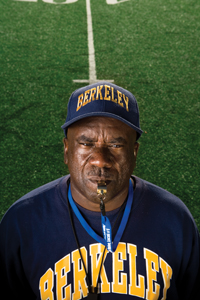
TODD WALKER IS AN URBAN COACH WHO TAKES HIS ROLE AS A MENTOR SERIOUSLY. Dead seriously. With his young charges caught up in a culture of street violence, he’s seen too many funerals. That’s why he takes his Berkeley Cougars—youth-league football players, ages 6–14—on a preseason tour they’ll never forget: to East Oakland’s Whitted-Williams Funeral Home.

Todd Walker

Todd Walker

It reminds me of the movie Scared Straight! Is that the goal—to scare them?
It really is to make them think. I was losing a lot of kids to street violence and one day a parent called and wanted me to talk to her son. I said, “I’ll take him to the mortuary and set him down with the funeral director.” Then other parents started calling.

But guns and violence are such a big part of pop culture today. How do you make your message stand out?
I tell them straight up: If you die this way, you die dumb. It ain’t cool. Everyone is walking around the funeral home with your picture on their T-shirts—but you’re dead.

And you back up your talk with some powerful visuals.
I tell them they have to touch inside the casket. That right there is so powerful—because when they go to a funeral there are two or three hundred people there. Here, there ain’t no showing off. It gets to them. It makes them think. When they leave, I make them go home and hug whoever their guardian is—the parent of the house.

And you can reach even the toughest, street-hardened kids?
I had one boy who was trying to be Mr. Hardcore. He said he could kill somebody. But when he went into the casket room he had a whole different attitude. He called me a week later and said he wanted to join the Job Corps. He was scared.
What do you tell your players about staying alive on the streets?
A lot of it is judging situations. If you see somebody arguing, you don’t get involved; you get away from it. A lot of the kids have real bad tempers. That’s really what the mortuary is for. I tell them, if a body is in here, they didn’t listen to somebody or they were at the wrong place at the wrong time.

The gym or the sports field used to be kind of a safe haven for troubled kids. Is that still true?
It’s different than 10 years ago. Then it was an outlet. Now, they don’t go to school; they don’t go to class, so they can’t play sports. A lot of them end up in jail. Now the kids can’t even go to the gyms ’cause there are people out there trying to kill them.

Yoshie Akiba – Jazz Matriarch

OAKLAND MAGAZINE – June 07

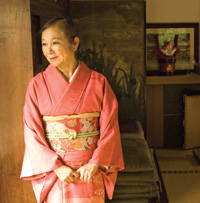
It’s Friday night and Yoshi’s is packed. But the renowned jazz club’s namesake, Yoshie Akiba, is as cool as a cocktail on a grand piano. A dancer, painter and businesswoman extraordinaire, Akiba finds balance and energy in some surprising ways.

yoshi_akibaThis place is a pressure cooker. How do you stay so calm?
Isn’t it amazing? I’m a World War II orphan. Everyone [in my family] was killed, except me. Yet, I’m so—happy. But it wasn’t like that from the beginning. I think I was guided by spirits, and I was very lucky.

Did the hardships you had as a child pave the way for your success?
When I think about it, growing up, I was always exposed to music and dance. After the war we had very little food, but we lived near an army base, and the people there used to help us, so to entertain them I learned songs and improvised dance. That way they would give me chocolate, chewing gum and candy.

You’ve come a long way. How do you keep your cultural connections?
My backyard in Rockridge has a traditional Japanese Zen temple. Every morning, I get up and meditate. Then I chant. Forty minutes each. It really makes me very clear and it cleans me and helps me see myself.

Your yard reminds me of the Japanese Tea Garden in Golden Gate Park. In fact, tea is a part of your daily ritual, too. Right?
Our culture is strongly connected with tea. It’s like a bridge between the material world and the spiritual world. I teach Japanese tea ceremonies in my house that are open to the public.

Green tea sounds a lot better for you than sake. But you must have some vices.

I do gamble. I play the dice and sometimes blackjack at Harrah’s in Reno. I like it because it’s fun and it’s living in the moment.

How about your husband? I understand he’s a high-level Buddhist priest and you’re, well, such a social person. Does your lifestyle work with his?

Interesting question. We compromise. I like to meditate and I like Zen Buddhism. So when we get together, we kind of remove ourselves from the real world. But we like to take people around when they come from Japan. You know, to the wine country. We also like nature, so we often go to the ocean.

Was the proximity to the water one of the reasons you picked Jack London Square for the location of your restaurant/jazz club when you moved it from Claremont Avenue?
Yes. But I also like Jack London. I’ve read many of his books and I really like his spirit. And I wanted to help Oakland. I think they really needed a place like this.

What do you tell other club owners when they ask how you made Yoshi’s so successful?
You have to love it and work hard and be really genuine. I have 130 people working for me. If I’m not a very good person, people won’t follow me.

BIG RICK STUART

Oakland Magazine – May 07

By Ginny Prior

Big Rick Stuart is hard to pin down. When he’s not hosting the 4 p.m.–10 p.m. slot on KFOG, the popular radio rocker at 104.5 FM, he’s mountain biking, motorcycle racing or taking friends out on his boat at the Oakland Yacht Club. He’s also a rabid Raider’s fan; so I was able to catch up with him at Ricky’s Sports Bar in San Leandro.

Who gave you the name “Big Rick Stuart”?
My first radio job ever, I went on the air using my first name, Richard—which I shortened to Rich—and my last name. It was up in Clear Lake, and the guy who came in after me said, “What’s your middle name?” I said, “Stuart.” He said, “From now on you’re Rick Stuart, because every time you said your name it sounded like you were sneezing.”

And where did the “Big” come from? Does it just describe your linebacker physique?
Actually, I went from Clear Lake to my college station at USF. So, I was a freshman in college, and I’d been doing radio for like a month, and everyone made fun of me and said, “Who are you? Big Rick? Are you Big Rick now that you have a paying job?” It was kind of a joke at first. It’s lasted 35 years.
When you were doing afternoons at Live 105 in the ’90s, you had a traffic guy named Sal Castaneda. You guys really clicked.

Working with Sal Castaneda was great. He’s really talented. I love watching him on [KTVU] Channel 2.
But to me he’s still this little voice on the cue speaker saying, “OK, I’m ready in 10 seconds.” And in 11 seconds the cell phone would cut out. We’re still friends to this day.

It seemed like you could really cut loose at Live 105. Does KFOG let you be as creative as you’d like?
Wolfman Jack—and he’s one of my heroes—had a great saying. He said, “It isn’t about Wolfman. My job is to make it fun to listen to the music you like.” So, as opposed to a talk show, where you’re filling up the hour with your incredible brilliance, which I would be a complete failure at, if I run out of something to say, I just press the button and there’s a cool song.

You’ve had some pretty sweet voice-over gigs—even a video game.
I had one pretty good game for Electronic Arts—a motorcycle riding game. I was the track announcer. I was [yelling out stuff] like, “Oh, my, God, I can’t believe it!” I was kind of like the John Madden of the game. Talk about a really different world. Radio is this live thing. This was more like perfecting something over and over.

What’s this penchant you have for motorcycle racing? Live radio isn’t enough of an adrenaline rush?
I don’t know. I just try to do things. I think it makes you more of an interesting person. And I think that leads to a bigger understanding of who listens to my show. But the motorcycle racing—I’m really slow; I’m really bad at it.

Any embarrassing bloopers you want to share?
A band called Rage Against the Machine had an album called Guerilla Radio, as in freedom-fighter guerillas. We were doing this big promotion, and you were supposed to hear the secret sound and call in, starting on my show on Friday afternoon. Off the air, I played the sound, and it was a monkey gorilla. I told someone, “Do you realize how stupid this is going to sound? We should have someone re-record this.” And they said, “We can’t. Everyone’s gone.” It was a total WKRP moment.

COOL JAZZ

Alameda Magazine – May 2007

Coming From a Garage Near You

By Ginny Prior

You’ve heard of garage bands? Well, Bob Parlocha can top that. He has a garage radio show, a worldwide jazz program emanating from the space that once housed his automobile. With the push of a button, the garage door rolls up to reveal a broadcast studio with literally thousands of albums and CDs lining the walls. It’s from this rather dank, dimly lit space, that Parlocha hosts six hours of some of the coolest jazz on radio today, a show that’s picked up on satellite by some 244 radio stations worldwide.
Many may remember Parlocha as the popular host of the Dinner Jazz Show on Alameda’s KJAZ-FM, in the ’80s and early ’90s. Those were the salad days for KJAZ, a 1,500-watt station that could compete with the AM monsters of the time, KSFO and KNBR. KJAZ was hailed as one of the premier jazz stations in the country, and Parlocha had actually been a fan before he ever became a host. In fact, he’d had no broadcast experience at all when he sent station owner Pat Henry a tape in 1978. “He liked it and told me to come in at midnight,” Parlocha remembers. The next thing he knew, he was on the air. “I was totally panicked. I couldn’t breathe. I couldn’t do anything.” But Parlocha’s extensive knowledge of jazz and his mellow, made-for-radio voice got him through that night and many more, as he went on to carve a niche with his popular show.

Fast forward to today, when Parlocha can broadcast jazz in his pajamas. “My wife gets up early to go to work, but I sleep in every day,” he says. “I wake up when my body says, ‘Wake up!” ’ His days are his own, as long as he records his six hours of programming for Chicago station WFMT-FM, 98.7. The station uplinks Parlocha’s program to satellite where it’s available for affiliates worldwide.

Parlocha has been dreaming of a job like this all his life. And in a funny way, his childhood in Vallejo prepared him for this kind of exposure. “My parents would have wild parties,” he remembers, “and they’d go wake up Bobby, and Bobby would have to come out and sing songs.” Parlocha ate up the attention, memorizing the melodies and lyrics of songs by the era’s well-known artists, like Nat King Cole. And not just in English but in Tagalog, since both parents had Filipino backgrounds. “I remember all the Filipinos; I would say a certain line in Tagalog, and they would just crack up and throw money at me.”

Please contact Ginny Prior to read the rest of this article.

Catching Zs

Looking for Mister Sandman
MARCH 2007
By Ginny Prior

It’s been said, and I tend to agree, that a good man is hard to find. But the object of my affection is more elusive than most. With his bedroom eyes and dreamy disposition, he literally sweeps me off my feet. I call him Mister Sandman.

I’m not the only one who’s looking for this guy. Millions of Americans have insomnia, sleep apnea and other related problems. But the good news is there’s a hotbed of local research that can help.

Dr. Jerrold Kram is a sleep scientist, if you will, at the California Center for Sleep Disorders in Oakland and Alameda. One of the nation’s leading researchers, Kram has been conducting sleep studies since 1981, and he’s amazed at how many people ignore the symptoms of sleep deprivation. “Sleep is vital to our health and well being,” he says, “and one of the biggest problems is snoring.”

Not only is it annoying, but snoring could also be a sign of a more serious problem—obstructive sleep apnea. “In the last few years we have very strong evidence that this leads to high blood pressure, heart failure, heart attacks and strokes,” warns Kram.

Oakland firefighter Thomas Gallinatti snored, waking up at least 36 times a night. He was so sleep deprived; he’d conk out almost anywhere. “Last year in Las Vegas, I fell asleep at the slot machine,” he admits. But what really scared him was nodding off behind the wheel. Eventually it got so bad that he checked into the sleep center for testing.

Think of it as a B&B, sans the breakfast. You bring your pjs and slippers and spend the night in your own private room, with a shared bathroom down the hall. “As soon as I laid my head down,” says Gallinatti, “I went out.” Never mind the fact that he was wired with about 20 electrodes, measuring everything from brainwaves to eye movement and breathing.

By 1 a.m., the staff could see that Gallinatti wasn’t getting enough air. “Imagine falling asleep and having somebody cover your nose and mouth,” Kram says. Gallinatti had sleep apnea, and his airway was collapsing. In his haze, he remembers getting fitted for a nose apparatus and hooked up to a breathing machine. It didn’t work. They switched to a nose and chin strap combination. Still, not enough air. So around 3 o’clock they brought out the big guns—the full face mask with adjustable airflow. And just like that, he was able to sleep.

“Some people are just genetically poor sleepers,” says Kram, “and giving them something to help overcome their natural problems is something we’ve come to recognize.” And he says sleep apnea is much more common than we think.

“It’s not confined to the obese. Anyone can get it,” he says.
Kram stresses that his staff deals with treatments, not cures. “There are some surgical cures, but they require very aggressive surgery on the throat and jaw and aren’t 100 percent successful.” Of course, if obesity is a factor, weight loss can help.

Your mattress might be a factor, too. Kram says it’s obviously important to feel comfortable, and the key to comfort is support. “Not necessarily a firm mattress,” he says, “but one that conforms more to your contour.” How about the pillow? For snorers, it could make a difference. “In some people there’s a little bit of evidence that a pillow can position the head with the jaw kept forward and the head more extended.”

Otherwise, he says the pillow doesn’t really matter.

Darkness does matter. A key sleep ingredient is a dark, quiet room, since light is a stimulus to being awake. It’s also important to adhere to a regular sleep schedule, with the same wake-up time each day. “I advise people who have trouble slowing down to do a diary at night and try to get all of the ideas out of their head,” says Kram, who adds that problem sleepers should limit their alcohol and their activity in bed. “Don’t read in bed. Other than sleep, sex is the only activity we recommend.”

What about the plethora of products on the market to aid in sleep? Kram says they certainly can help. Sleeping pills, breathing strips, snoring sprays—they’ve all got their fans. But if you get seven to eight hours of sleep a night, and you’re still not waking refreshed, Kram says you’ve most likely got a sleep disorder.

Heidi Janeiro sees the effects of sleep deprivation. As the first point of contact at the sleep center, she sees people walk in like zombies. “A lot of them become almost delirious, almost drunk, with really strange behavior,” she says. But the center’s success rate for treatment is high. And that’s a great thing for patients like Gallinatti, who trains firefighters for a living. “I’m going to tell everybody about this treatment,” he says. It’s unbelievable.”

Like the song says, “Mister Sandman, bring me a dream.”

Sweet Dreams

For more information on the California Center for Sleep Disorders, contact (510) 263-3300. Take a sleep quiz on the center’s Web site at www.sleepsmart.com.

The Birdman of Glenview

OAKLAND MAGAZINE
SEPT/OCT 2006
By Ginny Prior
Photography by Phyllis Christopher

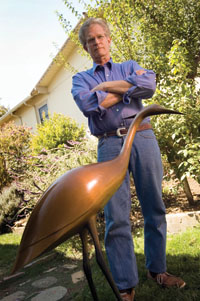
Wheatley Allen

Wheatley Allen

His bronze birds are treasured by premiers and princes. Four U.S. presidents have commissioned his art. Yet Wheatley Allen modestly works in his Glenview basement, plying a trade that he learned as a child in the Bay Area. “When I was a boy in rural Marin County,” Allen remembers, “I marveled at the way a covey of quail could explode from a quiet bush.” His family loved hunting, but Allen was never a very good shot. He was, however, handy with his Boy Scout knife. One day, during a vacation at Lake Tahoe, Allen sat on the pier and whittled a bird out of sugar pine wood. That’s when he got his first customer. “Trader Vic Bergeron asked me what I would charge to make him a quail,” Allen recalls. “I had no idea who he was, but he was a friend of some neighbors camping next to us.” The boy blurted out a figure, which he was sure was too high—$10—and Bergeron said, “Make it $20!” (Today Wheatley gets up to $12,000 apiece for his sculptures.)

That celebrity sale was all it took to wet Allen’s whistle for bird sculpting. He continued carving through high school and even for a time in the Navy. Getting married spawned new dreams of success as his artist wife, Rosemary, stood by him in his endeavors. “When we came to Mendocino in 1966,” Allen recalls, “we didn’t have any money in the bank.” So the couple boxed up some of Allen’s birds and held a one day show in the Bay Area. It was a sellout, and the money they made was enough to live modestly for a year.

But it wasn’t until 1972 when his next big break came. The Sacramento Bee ran a two-page feature on Allen, smack in the middle of the Sunday section. Then-Gov. Ronald Reagan read the piece and had his assistant order two quail sculptures—as gifts for the prime minister and the emperor of Japan. “Twelve years later when I met President Reagan at the White House,” Allen recalls, “he remembered every detail of those transactions, and remarked that the quail made a perfect gift because the emperor loved birds.”

But it was another world leader at Stanford’s Hoover Institution that provided an even more memorable experience. It was 1992, and Allen had just sent a picture of his snow goose to a friend who knew the secretary of state at the time, George Schultz. “I asked if it would make an appropriate gift from Schultz to Soviet President Mikhail Gorbachev,” Allen recalls. The next thing he knew, Schultz’s secretary was calling to see if the sculptor could be there at 7 a.m. with the snow goose. He was there at 6:30 a.m. Little did he know he’d be asked to present his sculpture to Gorbachev later that day, with just a five-second warning. “I was shaking in my boots,” Allen says, but he managed to grab the bird and announce, “Mr. President, this is a snow goose that migrates between our two countries.” The response was electrifying. “You mean a living link,” Gorbachev replied, obviously understanding the poetry. Allen was thrilled and says he’ll always remember the twinkle in the Soviet leader’s eyes. “It was one of my most cherished moments.”

But despite Allen’s powerful connections, he still modestly handles his own marketing and sales. And he’s pleasantly surprised when he gets a new commission. “I’ll go six months or a year and not much happens,” he says quietly, “then the White House calls and I think it’s my brother playing a joke.”

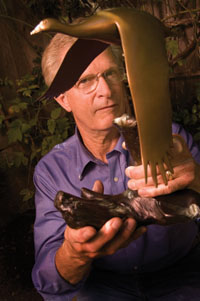
wheatley_allen2When an order comes in, the work begins with the wood whittling and ends with a process that includes pouring 2,000-degree bronze into a ceramic shell. When the bird is removed, the bronze is enhanced with its own patina. All Allen’s pieces are limited editions of 100, but the patina is done by hand, and that makes each creation unique.

Like the birds he sculpts, Allen seems to soar through life—often on a wing and a prayer. At 64, he looks like the picture of health but has been battling Parkinson’s for over a decade. The disease gives him hand tremors, which he counteracts with medicine and, of all things, music. “I can play the piano probably better than ever,” he says with a smile, not unlike that of the man to whom he presented the snow goose 15 years earlier. “God gives us what he thinks we can bear,” he reflects. “I just wish he didn’t have such a high opinion of me.”

You can see Wheatley Allen’s work online at www.wheatleyallen.com. His new book, Howard Wheatley Allen—Sculptor to Emperors, President and Kings, is available on his Web site.