Dialogues – State Supreme Court Justice Carol Corrigan

AUGUST 2006

At 57, her resume reads like a book of Who’s Who. But State Supreme Court Justice Carol Corrigan is as down to earth as anyone, with a sharp wit and a passion for golf and Notre Dame football. The Rockridge resident weighs in on some less than lofty matters as she shares her insight on food, politics and surviving Catholic school.

Q: It’s early in the morning and you’re so – animated. Have you been up for hours?
A: I try to get up around six and do 45 minutes or an hour on the treadmill. I’m not one of those people who leaps up to greet the day, but if I can roll out and put on my tennis shoes and get on the treadmill, I can do that.

Q: I’m trying to picture your house in Oakland. I imagine a cavernous library with dark wood walls full of legal books and one of those rolling ladders on wheels.
A: That would be dangerous. I actually had one of those when I was on the Court of Appeals because you need a lot of books to do that job. But I don’t have one at home. I do have a pretty good book collection, though. My mother was a librarian and my father was in the newspaper business so the written word in our house was sacred.

Q: So let me guess. You’re in at least one book club, right?
A: I’ve been asked, but it seems too much like a homework assignment. You’re like – read that book – and then I’m real tempted to get the cliff notes and then I feel guilty. At the moment, though, I’m reading So Many Books, So Little Time – which is wonderful. Then I’m reading The History of the Middle Ages. I’m a real history buff.

Q: You went to Holy Names College in the early seventies when it was an all girl’s catholic school. Was that a pretty wild place?
A: I wouldn’t say Holy Names was a wild school but we were wild by Holy Names’ standards. It was the anti-war period and it was a very exciting time to be on a college campus. The poor nuns, when we got there all the rules were very much in place and we were told, “don’t forget when you come, you need to bring a pair of white gloves for the teas we will be having” and we had to dress for dinner four nights a week. By the time we left, they were thrilled if we just came to dinner clothed.

Q: Your dad was with the Stockton Record. Did he ever try to talk you into going into the newspaper business?
A: I was the first in my family to go to college. I think my parents were just thrilled that I was aimed at gainful employment. My father actually said “be a teacher, it’s a great job for a woman, it’s got good retirement and you’re done early in the day.”

Q: Your politics seem to be an evolution of sorts. You started out as a democrat and then switched to the Republican Party in the early 1990s. Now you call yourself a centrist. Did you have a life-changing moment?
A: I was a middle of the road democrat and now I think I’m a middle of the road republican. I don’t think that I switched so much as the parties around me switched. But I don’t think my party affiliation is the defining characteristic in my own self image.

Q: Were you really surprised when you got the appointment to the California Supreme Court?
A: Oh, yeah. I think if you’re not really surprised then your ego is too big. And there’s a lot of stuff that happens before you get the call. It’s a very long process and you have to complete this enormous questionnaire which goes on forever and then there are interviews and they’re looking at a significant number of people and trying to figure out what their best judgement is.

Q: I would have been worried that they’d dig up some dirt on me. But you – I can’t find anything controversial about you at all – not even a bad blog.
A: Far be it from me to dissuade you from that notion. You know how it is when you’ve been raised by educators who’re prone to beat you when you’re bad. But really, I have been tremendously blessed in my life with a wonderful, wonderful family – and to be educated by people who made a choice to devote their entire life to teaching. Their whole focus was on nurturing these little lives, so that gives you a solid foundation to build on.

Q: You’ve been described as someone with a sharp wit – even glib. Has it gotten you into trouble?
A: I really always try to keep a lid on my sense of humor because it strikes me that humor is wonderfully important but especially in a fairly serious enterprise it’s like fire in a house – it’s useful to a certain level but then can be very troubling.

Q: So who do you identify with more – the lawyers on Boston Legal or those old chestnuts like Matlock or Perry Mason?
A: That’s a great question. I love Boston Legal. The writing – I really like TV shows with snappy dialogue and each of those characters is so wonderfully drawn. When I was thinking about going to law school I was pretty sure I wanted to be a trial lawyer, and no-one ever gives me credit for this, but I’m kind of shy by nature. (Every time I say this people kind of guffaw) But trying a case – it’s a very creative process and a fascinating one and I was drawn to that – so Perry Mason was interesting to me too.

Q: But would you date Denny Crane?
A: Gees, I hope not. Denny’s very pithy. But I love the scene at the end where he and the other guy are sitting out on the veranda smoking their cigars and recounting their day.

Dialogues – Dr. Joel Parrott

NOVEMBER – 2006

A saner man may have said, “No thanks.” The Oakland Zoo had a reputation for being one of the worst in the country when Dr. Joel Parrott took over the director’s job in 1983. But in a matter of months, he had engineered a plan to replace the outdated exhibits with state-of-the-art animal habitats. Twenty-three years later, Oakland is considered a model for zoos around the world.


Q: When you came to the Oakland Zoo, it had just been named one of the 10 worst zoos by the Humane Society of America. How did you turn it around?
A: The first thing I did was put together a list of my greatest concerns. The Humane Society highlighted the sun bear grotto and the elephant enclosure and the lion grotto. But those animals weren’t having problems because of their enclosures. The real problems were the ocelots—they were pacing and stressed, in too small a cage. When that was taken care of, we went on to the next concern on the list.
Q: In those early years, you had quite a reputation for being a hands-on guy. You even operated your own heavy equipment at the zoo.
A: Well, we didn’t have any money, and I heard so many people say, “Well, we can’t do it because we don’t have any money.” My attitude then, as it is now, is, “We’ll find a way to do it.”
Q: How did the zoo directors feel about that?
A: It was more of a worry for my staff because the first time I learned to use a backhoe, my first bite in the ground ruptured a water line. It was after hours, and we had to call people in just to find out how to shut the water off because it was spraying all over everything.

Q: Do you get ribbed for being a bird doctor and having the last name Parrott?
A: You know, I made Herb Caen’s column a few years back. He thought it was pretty neat that my name was related to what I did. But Dr. Parrott isn’t even the best. I have a colleague in wildlife medicine whose name is Peregrine Wolf.

Q: There’s no nice way to ask this next question. Is your home a zoo too?
A: We’ve got a cat, two guinea pigs, two birds and a dog. We’ve had rabbits, too; and a boa constrictor.

Q: You say you had a boa constrictor. It didn’t get away, did it?
A: No, I gave it to the zoo. I didn’t want it around the house anymore. They smell, to tell you the truth, compared to dogs and cats.

Q: Do you have to have a special wardrobe to be a zoo director?
A: Every time I wear a tie it has an animal on it, because I want to be the greatest promoter of wildlife every bit of the day. But that said, I’m one of the very few who can get away with wearing safari clothes to work every single day.

Q: Khakis are great when you’re running a backhoe.
A: Q: Yeah. They don’t show the dirt.

Pop Secrets At The Paramount

Oakland Magazine – December 2005

For a woman in her golden years, Jean Cunningham spends a lot of time in the attic. No, she’s not sorting through family heirlooms, or even cleaning house. The scope of her work is much bigger than that, as she strives to preserve a body of music that spans more than a century.
Jean is on a mission to save one of the largest collections of musical scores in the country. To do this, she must climb the old, narrow staircase to the top of the historic Paramount Theatre several times a week – where row after row of sheet music is cataloged and stored in a cool, dimly-lit room.

On the day I was there, a match was made. The drum and trumpet scores came in for an out of print piece and Jean carefully added them to a folder with parts for the flute, saxophone and other instruments. “I believe that makes a complete set,” she said, like a puzzle-master fitting in the final, critical piece.

It’s a project Jean has overseen since 1975, when she was a professional flutist for the Oakland Symphony and the orchestra’s music librarian. “Jack Bethards was the manager of the symphony,” she remembers, “and he was the prime mover behind the symphony buying the Paramount and saving it from the demolition ball.” She says Bethards donated a huge collection of pop music scores to the Paramount in the mid 1980’s and she was asked to catalog and maintain it. “The stars were just right,” Jean adds, saying the symphony was bankrupt and she was ready for retirement anyway. She just needed to tweak her tastes in music a tad. “I had a masters in musicology and I was a musical snob and here I was dealing with this pop stuff,” she laughs. “Now I love it.”

In her days with the Oakland Symphony, Jean played many of the songs that she’s now trying to save. Musical arrangements from as far back as 1850 that are still in demand today. In fact, the library gets calls from musicians worldwide who want to perform these pieces. “It’s mostly word of mouth,” Jean says. “We get requests from Canada and Europe, we even had one from Thailand.” It’s usually conductors looking for full sets of music that they can perform. “Big band music is the most in demand” she adds, tossing out household names like Miller and Dorsey and Ellington and Basie. Jean charges a handling fee, which allows her to receive a small stipend for her work. The Paramount provides the storage space and pays the electricity and the phone bills. But there’s not much more to it than that. “When real librarians come here, they just throw a fit,” Jean says, referring to the modest facilities. “We have some acid-free containers for original, one-of-a-kind scores, but if it were a real archival library it would be temperature and humidity controlled.”

And that’s the plea of most every non-profit. They need more money and help. “Attrition and old age have set in,” says Jean, “and I don’t have many volunteers anymore.” Yet the music keeps coming in – 25 cartons from one source and 50 from another. Some cartons from the CBS Radio Orchestra came in with scores so brittle, they literally fell apart when they were touched. In the basement of the Paramount, the music was carefully pieced together on a board under plastic and then photographed before being moved to the attic for storage. Up and down the stairs all day, it’s a labor of love that helps Jean stay physically fit. But even more importantly is the mental stimulation, and the satisfaction of knowing she’s preserving a treasure. It makes her life’s work all the more melodic. For more information, you can call the Paramount Theatre at 510-893-2300, extension #810. Or you can email Jean at jcunningham@paramounttheatre.com

Raider’s Amy Trask Makes NFL History

Alameda Magazine, January 2004

Behind every good man, there’s a woman. This old saying probably wouldn’t sit well with Amy Trask, but there’s no denying she’s the “point person” for Al Davis and the Oakland Raiders. When Davis first hired Trask over 16 years ago, as a young attorney just out of law school, he was already known for shattering the image of the good old boy’s club. “I do feel very, very privileged to work for an organization that has a four decade tradition of hiring without regard to race, gender, ethnicity, age, etc.” Trask says. “Think about it–Tom Flores, Art Shell, and the list goes on and on.” But does Trask stop to bask in the glory of her own accomplishments? After all, as the NFL’s first Chief Executive she’s gone where no woman has gone before. Her answer is–no. “If I don’t want my gender to be an issue, the last thing that I should do is make my gender an issue,” she says without hesitation.

Amy Trask

Amy Trask

Still, you have to wonder where Trask got the grit to forge a trail in what’s been a virtual wilderness for women–the NFL. “The commandment in our house was “do not label people–do not pigeon hole people,” she says, adding, “Character was the prevailing theme here, and the value of hard work.” For Trask, her parents were strong role models. “They were critical of people that wanted to ”cut corners” or ”find a short cut” or take an ”easy way out,” she adds. At the same time, they told their daughter to find something she loved and to do it with all her heart.

Enter, football. It wasn’t a passion she was born with, or even born into. Trask admits, she’s not quite sure how she became the rabid football fan she is today. “I didn’t grow up in a family of avid football fans. I am really the first in that regard.” She recalls being glued to the TV, watching football, when her parents wanted her to go out with them. By the time Trask attended college at Cal in the late 70’s, she was rapidly becoming a Raider fan–cheering the team on at the Oakland Coliseum. When she graduated from UC Berkeley and started law school at the University of Southern California, the Raiders were making their own move south. It was as if two planets had aligned. By 1987, Trask found the opportunity she’d been waiting for, and was hired to work in the Raider’s legal department.

As you can imagine, handling litigation for the Raiders has been more than a full time job. But Trask says people often forget who started the legal wrangling here. “The City of Oakland and Alameda County (our landlords) sued us (during the football season). All the litigation has stemmed from that action.” She adds, “It’s hard to imagine a landlord that has only three tenants getting into litigation with all three of them,” saying it’s unfortunate for everyone.

What energizes her is the fans. “Simply put, we have the best (absolutely, positively, without a doubt the best) fans in all of sports,” she says. And on any given Sunday, when the Raiders are on the road, Trask and her husband, Rob, make the tail-gate circuit. They walk the stadium parking lot meeting fans. “The Raider Nation is vast,” she says proudly, adding there’s a fan base from South Dakota that travels all the way to Denver to see Oakland play. Then there’s the island contingency. “We have an enormous following in Hawaii. All over the islands, you find Raider gear and Raider fans,” she says. Trask laughs that the team’s websites–Raiders.com and Raidersenespanol.com get hits from every continent on earth except, possibly, Antarctica.

Dakota fans hold a special place in Trask’s heart. Her husband, Rob, is from what she calls “The great state of South Dakota.” “I’ll tell you, for a state with a population of well under a million, there are a lot of impressive people who come from there,” she says. (Tom Brokaw and USA Today founder Allen Neuharth to name just 2).

Trask and her husband live in the Oakland Hills and share many of the same interests. They’re both attorneys, and, since they met in graduate school in Los Angeles, they both love the beach. “My husband and I lead a really, really simple (okay, boring) life. We enjoy attending sporting events and entertaining and spending time with dear friends.”

amy_trask2But there’s another side of Trask that reveals much about her soul and spirit. She’s a horsewoman, with a 4-legged equestrian team mate named Wind Jammer. “Riding (and particularly jumping) is truly a partnership between the horse and the rider,” she shares, adding that the two, over time, can anticipate each other’s moves. Sound like football? Trask thinks so, comparing rider and horse to any two players who can anticipate what each other will do in a certain play. “A really, really amazing sensation is when you can’t determine where the horse ends and the rider begins and vice versa.” She says she’s learned a lot about herself by working with horses. Everything from how she meets challenges and navigates obstacles to whether she’s a good leader and follower.

Trask has another outlet for her passion for animals. She’s on the board of directors for ARF, Tony LaRussa’s Animal Rescue Foundation. “It’s a magnificent program,” she says, “both for the animals that are rescued and for the people rescued by the animals. ARF pairs animals with at-risk teens who benefit from their unconditional love. Though she has no children of her own, Trask enjoys spending time with kids. She’s served on the board of the Alameda Boys and Girl’s Club and last fall, was a celebrity judge for the Alameda Youth Court. “This program allows children to mature, to learn the difference between right and wrong, and to accept responsibility for their behavior.” Trask says she’s inspired by the teens in the program.

You get the feeling from talking to Trask, that everything in her life is connected to the bottom line–to be at the top of her game. To this end, she works tirelessly on the Raiders image in the community. Like the Raiders fashion show she helped organize, recently, for the East Bay Agency for Children. Trask took the opportunity to mix a little business with pleasure by holding an impromptu staff meeting during the cocktail hour. Then it was onto the runway, where she thanked a packed room of fans for their support and spoke on behalf of her team. “These guys have one day off a week, and they’ve chosen to spend it with you.” This, too, is Trask’s job–helping the team stay connected to the community.

With her groundbreaking place in the hierarchy of the Raiders and the NFL, Trask is certain to be a role model for future generations of women. How fitting, then, that her own role model is Rosa Parks. “What a strong, courageous, powerful woman,” Trask says thoughtfully. What strength and courage it took for her to say “I’m not going to the back of the bus.” And the impact that had on an entire Nation.” Like Rosa Parks, Trask has shown with her own career, that she takes a back seat to no-one.

The World is Frederica Von Stade’s Stage, But Alameda is Home

Alameda Magazine, November/December 2002

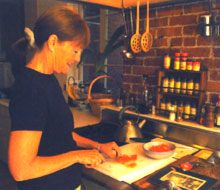
On a stately, tree-lined street, not far from roads named for famous composers, lives a music legend. Frederica von Stade moves comfortably across her big, breezy kitchen to the whistling tea kettles and pours a cup of morning nectar for the voice — and the soul.

Flicka in her kitchen

Flicka in her kitchen

Outside, the Tibetan prayer cloths hanging on the balcony spread their blessings over the house, a century-old Tudor with all the charm you’d expect for a star of von Stade’s stature. But what you don’t expect is her zest for simple living.

“Call me Flicka,” says the woman with the warm mezzo soprano voice. I brushed any connection to horses out of my mind. I was wrong.

“I was named after my father’s polo pony,” she smiled. “The show, ‘My Friend Flicka’ was big at the time.” This could explain von Stade’s strong connection to animals — she has several dogs and cats in the house these days. Just part of the family that includes five children and two grandchildren that comes and goes.

For 35 years, Flicka has captivated audiences all over the world as one of the great opera stars of our time. Her life with the Metropolitan Opera has been a whirlwind of performances, on stage and on broadcasts. But as she approaches 60, Flicka finds her greatest joy is staying home. The harmony she creates with her husband, Mike Gorman, (one of the founders of the Bank of Alameda) matches that of any symphony.

So we sip from our mugs and chat like girlfriends about family and music and the incredible, resilient spirit. “I have a singing lesson later today and then lunch with my daughter,” Flicka says, noticing the surprised look on my face. A woman with six Grammy nominations and dozens of recordings takes voice lessons?

“She’s a marvelous teacher named Jane Randolph, in the Oakland Hills. She knows the true nature of singing and all its wonder — its lightness, its relation to the soul,” she says, almost dreamily.

As the light streams in through the adjacent sun-porch, I notice a green bicycle — a beach cruiser splashed with white paint. “I love that bike,” Flicka shares. “I did that because I was afraid someone would steal it.” Then she showed me the “golf bag” Mike fashioned out of duct tape and PVC pipe near her back fender. A 20-minute ride and she can play the short nine and Alameda’s public course.

“Golf is like singing,” says the woman who would know better than most. “Between addressing your ball and the back-swing are probably 5,000 thoughts and between standing on stage and hearing the first chord of the piano are about 5,000 thoughts. Your job is to control those thoughts.” No problem with the singing, but Flick admits that golf gives her fits.

“My game is so horrible, I don’t want to blow a hundred bucks on a private course,” she laughs.

Cooking is another hobby that many singers enjoy. It comes naturally to Flicka, who’s mother was a caterer. “I can cook fo the masses,” she laughs. “And I do, every Sunday when the kids come over for dinner.” You can almost hear the laughter as you look at the long dining room table, adorned with a handmade centerpiece from one of the grandchildren.

“Mike does the barbecue and I try out vegetarian dishes on everyone,” she says.

After dinner the family retires to the music room to hear Flicka sing, right? Wrong.

“They’re tired of hearing me,” she laughs, adding she saves that for house concerts she hosts as fund-raisers. A favorite charity is the alameda Education Foundation, which subsidizes music in the public schools. Flicka also supports programs that provide music for at-risk kids.

“I don’t know anything about how to solve some of the problems in this country, but I feel strongly that if we begin with children, we have a chance,” she says. As the singer cuts back on traveling and performances, she sees herself teaching music to pre-schoolers and teens.

With a life so rich and full of people and activities, where does a renowned opera start find time to practice?

“I sing around the house all day” she reveals. Even on the treadmill.

“I learn music during my morning workouts — so I won’t be bored out of my mind.” An hour of singing opera on the treadmill and anyone else would be thinking oxygen, not breath control.

Hall of Fame Raider, Dave Casper

Diablo Magazine, August 2002

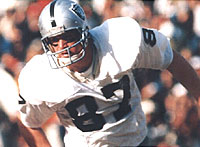
Moving back to the East Bay isn’t big news- unless you’re legendary Raider’s tight end Dave Casper. “The ghost” is Alamo’s newest celebrity citizen – and will be inducted into the Pro Football Hall of Fame on August 3.

Dave Casper

Dave Casper

Known for the “supernatural” way he caught those Kenny Stabler passes in the 1970’s (not to mention sharing a surname with a cartoon apparition), Casper is just the 13th Raider to be immortalized in Canton, Ohio.”I was fortunate that some of the plays I made kept my name in front of the people,” says the former Notre Dame All-American. Plays like his 1977 game-winning touchdown dubbed “the holy roller” where he kicked a loose ball at the five-yard line and fell on it in the end zone.

These days, Casper plays in the financial arena – where he suits up as managing director of the Walnut Creek office for Northwestern Mutual Financial Network. “The office opened up just when I was thinking of returning to the Bay Area from Minneapolis,” he says. Casper admits his silver and black celebrity status didn’t mean as much in Minnesota as it does in the East Bay.. “[Minnesotans] still remember that Raiders win over the Vikings in the Super Bowl,” he laughs.

Good Guys’ CEO Ken Weller

Alameda Living Magazine, August/September/October 2002

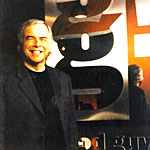
There’s a new man in town – a straight shooter with a keen eye for business. He’s one of the good guys. In fact – he’s the head of Good Guys Electronics – CEO Ken Weller.

When Weller took over as president of the struggling retailer in September of 2000, he cut overhead by moving the company headquarters from Brisbane to Alameda’s Harbor Bay Business Park. But money isn’t the only thing on this man’s mind. His playful sense of humor and zest for life make him one of California’s most candid executives.

Good Guys' CEO Ken Weller

Ken Weller

Q: Growing up in Oxford, England, what made you move to the U-S?

A: I was dating an American. She was vice consul to Haiti. I went there and did some volunteer work for Mother Teresa’s organization before coming to California. I was good at treating wounds because as a kid I rode race horses. In Haiti, we would literally pick people up right off the sidewalk and they’d come and die in the hospice. Part of it was making people feel comfortable so they could die with dignity.

Q: You said you rode horses. Were you a jockey?

A: I was an amateur jockey. I did that for 7 years and rode for the richest man in the world at the time.

Q: So when did you move to California?

A: In the early 80’s. I thought I was going to be here for a couple of years, find myself a part time job, play golf and ski a little. Then I joined Good Guys as a product salesperson in our Concord store. The stupidest thing I ever did was to take a promotion.

Q: Why do you say that?

A: The company spent money advertising and customers came in the door and I earned commissions when I sold them things. That’s a pretty good life. You go home at night with no worries, no stress.

Q: So you moved up to management?

A: Assistant manager and then store manager. I made my reputation turning stores around. I always remember my boss telling me “Boy, you seem to be lucky – you’ve been to 3 or 4 of these stores and everywhere you go you get lucky.” And I said – “you know what? Maybe it’s not luck.” It really pissed me off.

Q: Financially, how does Good Guys look today?

A: I really believe that Good Guys is in the sweet spot of the electronics industry. There’s a lot of new technology – even in television. This whole idea of running lots of things in your home – if you had asked me 2 years ago, I’d have said that was going to happen through the computer. Today I think it’s generally excepted it’s going to happen through the digital television.

Q: So is your own home high tech?

A: Not particularly. But I love music. The joke around the company is that I always break into song. If I could have asked God for more talent, it would have been singing – and golf.

Q: You know, you can’t have everything.

A: I know – and do you know the beauty of all this for me? If it all finished tomorrow – I’d have still had a charmed life.

With annual sales of more than $800 million, Good Guys is the largest specialty retailer of higher-end consumer entertainment electronics in the nation.

Brooks Island

Diablo Magazine, June 2002

Wanted: someone to live on a windswept island in San Francisco Bay. Must love nature and isolation. Need strong survivor skills and sturdy boat.

Roy Tedder and Heather Hailey

Roy Tedder and Heather Hailey

Roy Tedder and Heather Hailey are the “survivors” who accepted this job – as caretakers of Brooks Island. Sixty five acres of rock and sand – home to the East Bay Regional Park District’s only wildlife sanctuary.

Soul-mates, Roy and Heather live their lives by the tides – which they check daily before heading ashore to do chores. Groceries and laundry, propane and more get transported by motorboat from the Richmond Marina to their modest island home. A sudden storm and the couple is stranded, sometimes for days as heavy winds whip the choppy waters.

Brooks Island is rich with history. Legend has it gold is buried here. Cellblocks at Alcatraz Prison were built with this island’s rock and Bing Crosby and Trader Vic once owned a gun club here.

You need a permit to visit Brooks and the park district offers beginning kayak trips to the island. Sign up, and you may meet the couple’s 50 year old oyster named “Oscar”. The stories he could tell – if only he’d “come out of his shell”.

Montclair Malt Shop

Diablo Magazine, May 2002

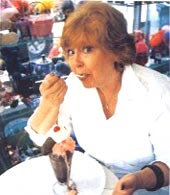
Got pickles? The Montclair Malt Shop does – and they’re giving them away to pregnant women. Big, juicy dills, just waiting to be crunched – with a side of ice cream.

Maurine Marie

Maurine Marie

It’s not for the faint of palate. In fact, some young women today haven’t heard of the pickles and ice cream craving of their mother’s generation. But owner Maurine Marie remembers. “About a year ago, I decided to put up a hand-written sign offering pregnant women a free pickle with their ice cream order.” Soon she had her first nibble – a customer with such raging hormones she ordered two Mango Banana Smoothies at a time – with pickles on top. “The pickles were so huge, they wouldn’t float on top so I put them in cups” says Marie.

Seems the middle trimester is prime time for food-craving expectant mothers to succumb to temptation and indulge in this love affair with sour and sweet. Women in their first trimester don’t usually have the stomach for such experimental cuisine, and by the final three months of the pregnancy, they’re getting serious about cutting back on calories. But during months four-to-six: Pucker up, baby!

Design a site like this with WordPress.com
Get started