As Years Go By

This season has me thinking about birthdays. Of course, the birthday of Christ comes to mind, but another celebration came up recently – a milestone for a woman who grew up in Montclair and was Oakland’s Mother of the Year in 1965. Gladys Copland turned 90 the other day. A house full of friends and family hid in the hallway as she walked up the steps to her son’s home – and then shouted SURPRISE as she opened the door. A lesser woman might have fainted, but Gladys jumped right into the festivities and was soon telling stories of her life in Montclair.
She was an avid tennis player. She worked as a nurse while raising twin boys and a daughter. And in her spare time, she volunteered at the Montclair Rec Center, as well as Sonoma Hospital. “There were lots of mothers who did more than I did,â€� she said modestly as she looked back on her life. But few in the room would agree. Gladys raised her family, helped her community and inspired everyone who knew her. More than just a Mother of the Year – she’s a mother for all times.

Twinkle Toes: Did you know there are four different dance classes at Montclair Rec Center? Three are free – including ballroom dancing, which the center hasn’t had since Bill Jones used to teach it. The new classes start January 11th from 1-3:30 (Wednesdays) and you don’t have to sign up – just drop in. There’s also German Folk dancing on Thursday nights from 8-10, Greek Dancing on Wednesday mornings from 9:45-11:45 (not free) and Jazz Tap for adults on Tuesday evenings from 6:30-7:30. Now if we just had a dance hall in Montclair…

Email Bag: Reader Jackie Sisich says the mailbox is back at the Thornhill 7-Eleven – back from medical leave, after getting knocked for a loop by a wayward car a few months ago. Apparently that thick metal jacket doesn’t do much to protect the receptacle from injuries. The stay in the mailbox hospital was lengthy, to say the least.

And reader Mary Feinberg is jubilant over the gingerbread house at Montclair Bistro. “We were there at the end of November and it was under construction�, she writes. “By now it should be done and fabulous.�

Santa Paws: Not everyone likes sitting on Santa’s lap. Just ask Marty Martin, the hills guy who filled in for Santa last week at Montclair’s Pet Food Express. “It was wild,â€� he said. “I had a cat on my lap that was hissing and clawing at my beard.â€� Another photo had him posing with a couple of 120 pound St. Bernards. Pit Bulls and Poodles and kittycats too – it was a regular pet parade at the Smiley Dog Rescue photo booth. And if animals could talk, I wonder what they’d ask Santa for…

Humbug Humdinger: It wouldn’t be Christmas without Scrooge and the annual production of The Christmas Carol at Mills College. A lot of hills folks have parts this year, including Jeanne Dupont who plays Mrs Cratchit. “My kids Leo and Lana are in the Cratchit family with her,â€� says local mom Rebecca Faiola, “and Leslie Manning (one of the producers) has her cute boy “Scott” playing the Poulterer – he’s great!â€� Steve Schaeffer, “The ComputerGuy”, plays Scrooge and 21-year-old Danny Buell is the director. “This is a “broadway-style” song and dance production that moves along quickly and holds your attention,â€� says Faiola. Call 531-5801 for tickets.

Got news? You can reach Ginny Prior by phone at 510-273-9418 or on the web at http://www.ginnyprior.com.

Celebrating The Season

LET’S GIVE IT UP for winter. It took a while to get rid of all the hot air from autumn, but we’re finally into the months that make your cheeks rosy. And your teeth chatter. And your PG&E bill hit the roof. And here’s a toast to every neighbor who has their lights up. Whether it’s the icicle lights that come down in squiggly strands or those old-fashioned bulbs that my parents used to hang — they all make the season bright. There’s nothing like walking in the silent night with a starry sky and homes all a-glow. Even the deer seem to celebrate, as they proudly display their antlers. It’s the most wonderful time of the year.

OUR TOWN: Thanks to the merchants who made the village stroll so special. It was a scene out of Currier and Ives as carolers sang and Christmas bells rang and villagers waved from the cable car. Gleeful shoppers popped in and out of warmly lit stores, sipping on wine and nibbling cookies and cheese. I was touched to see all the people in A Great Good Place for Books, remembering the late Debi Echlin. She would have loved this village stroll. She would have soaked up the neighborhood spirit.

PAMPERING PARTY: I’ve heard of some unusual holiday parties, but this one wins — hands down! A group of moms made the most of their annual ornament exchange party recently by bringing their gifts, wine and cheese to Femi Macus Nail Salon in the Glenview. They not only exchanged presents but they got their nails done. A mani/pedi with a glass of wine — now this is an idea worth looking into.

WINE TALK: All my talk about hillside vineyards and backyard winemakers in Montclair has triggered another e-mail, this time from Randy Keyworth. He and partner Jack States have just opened Lost Canyon Winery, near Jack London Square. It’s a big improvement over their old digs: Jack’s garage. Drop by and see how far they’ve come with their tasty pinot noir and syrah — two of my favorites!

E-MAIL BAG: Kids don’t always get the recognition they deserve. That’s why Scott and Karen Senzig (Montclair Mortgage) want readers to know about the sweet thing some local youngsters did recently. It started when Karen told a friend, Peg Kelly, that they needed towels for cleaning up after meals at St. Vincent de Paul’s free dining room.

“She mentioned this to her son, Kevin Huber, and he and his sixth-grade class at Corpus Christi School ran with it and filled three huge plastic bags,” Karen says. The folks at the dining room were so grateful they literally shouted for joy.

“It’s the little things that count,” Karen says.

VANISHING ACT: A few things have “gone missing” in the village lately. For one, the bench in front of Starbucks was stolen the other night, leaving coffee drinkers high and dry as they look for a resting place.

Meanwhile, reader Constance Young says the mailbox by the Thornhill 7-Eleven has disappeared.

“I noticed about a month ago that the mailbox had suffered some sort of minor automotive collision,” she writes. She says that soon after, it was gone altogether. I’ve forwarded her concerns to the Montclair Safety and Improvement Council.

CHRISTMAS CONTEST: It’s a cookie … it’s a bread … it’s a — house! Nothing says Christmas like gingerbread, and the Ritz Carlton Half Moon Bay is hosting its annual Gingerbread House Contest tomorrow. So get out the gumdrops and royal icing. All ages are invited to enter and enjoy the elaborate gingerbread houses that deck the halls of this coastal resort. Wrap up the day with the 5 p.m. tree lighting and you’ve got the makings of a wonderful holiday tradition.

Raider’s Amy Trask Makes NFL History

Alameda Magazine, January 2004

Behind every good man, there’s a woman. This old saying probably wouldn’t sit well with Amy Trask, but there’s no denying she’s the “point person” for Al Davis and the Oakland Raiders. When Davis first hired Trask over 16 years ago, as a young attorney just out of law school, he was already known for shattering the image of the good old boy’s club. “I do feel very, very privileged to work for an organization that has a four decade tradition of hiring without regard to race, gender, ethnicity, age, etc.” Trask says. “Think about it–Tom Flores, Art Shell, and the list goes on and on.” But does Trask stop to bask in the glory of her own accomplishments? After all, as the NFL’s first Chief Executive she’s gone where no woman has gone before. Her answer is–no. “If I don’t want my gender to be an issue, the last thing that I should do is make my gender an issue,” she says without hesitation.

Amy Trask

Amy Trask

Still, you have to wonder where Trask got the grit to forge a trail in what’s been a virtual wilderness for women–the NFL. “The commandment in our house was “do not label people–do not pigeon hole people,” she says, adding, “Character was the prevailing theme here, and the value of hard work.” For Trask, her parents were strong role models. “They were critical of people that wanted to ”cut corners” or ”find a short cut” or take an ”easy way out,” she adds. At the same time, they told their daughter to find something she loved and to do it with all her heart.

Enter, football. It wasn’t a passion she was born with, or even born into. Trask admits, she’s not quite sure how she became the rabid football fan she is today. “I didn’t grow up in a family of avid football fans. I am really the first in that regard.” She recalls being glued to the TV, watching football, when her parents wanted her to go out with them. By the time Trask attended college at Cal in the late 70’s, she was rapidly becoming a Raider fan–cheering the team on at the Oakland Coliseum. When she graduated from UC Berkeley and started law school at the University of Southern California, the Raiders were making their own move south. It was as if two planets had aligned. By 1987, Trask found the opportunity she’d been waiting for, and was hired to work in the Raider’s legal department.

As you can imagine, handling litigation for the Raiders has been more than a full time job. But Trask says people often forget who started the legal wrangling here. “The City of Oakland and Alameda County (our landlords) sued us (during the football season). All the litigation has stemmed from that action.” She adds, “It’s hard to imagine a landlord that has only three tenants getting into litigation with all three of them,” saying it’s unfortunate for everyone.

What energizes her is the fans. “Simply put, we have the best (absolutely, positively, without a doubt the best) fans in all of sports,” she says. And on any given Sunday, when the Raiders are on the road, Trask and her husband, Rob, make the tail-gate circuit. They walk the stadium parking lot meeting fans. “The Raider Nation is vast,” she says proudly, adding there’s a fan base from South Dakota that travels all the way to Denver to see Oakland play. Then there’s the island contingency. “We have an enormous following in Hawaii. All over the islands, you find Raider gear and Raider fans,” she says. Trask laughs that the team’s websites–Raiders.com and Raidersenespanol.com get hits from every continent on earth except, possibly, Antarctica.

Dakota fans hold a special place in Trask’s heart. Her husband, Rob, is from what she calls “The great state of South Dakota.” “I’ll tell you, for a state with a population of well under a million, there are a lot of impressive people who come from there,” she says. (Tom Brokaw and USA Today founder Allen Neuharth to name just 2).

Trask and her husband live in the Oakland Hills and share many of the same interests. They’re both attorneys, and, since they met in graduate school in Los Angeles, they both love the beach. “My husband and I lead a really, really simple (okay, boring) life. We enjoy attending sporting events and entertaining and spending time with dear friends.”

amy_trask2But there’s another side of Trask that reveals much about her soul and spirit. She’s a horsewoman, with a 4-legged equestrian team mate named Wind Jammer. “Riding (and particularly jumping) is truly a partnership between the horse and the rider,” she shares, adding that the two, over time, can anticipate each other’s moves. Sound like football? Trask thinks so, comparing rider and horse to any two players who can anticipate what each other will do in a certain play. “A really, really amazing sensation is when you can’t determine where the horse ends and the rider begins and vice versa.” She says she’s learned a lot about herself by working with horses. Everything from how she meets challenges and navigates obstacles to whether she’s a good leader and follower.

Trask has another outlet for her passion for animals. She’s on the board of directors for ARF, Tony LaRussa’s Animal Rescue Foundation. “It’s a magnificent program,” she says, “both for the animals that are rescued and for the people rescued by the animals. ARF pairs animals with at-risk teens who benefit from their unconditional love. Though she has no children of her own, Trask enjoys spending time with kids. She’s served on the board of the Alameda Boys and Girl’s Club and last fall, was a celebrity judge for the Alameda Youth Court. “This program allows children to mature, to learn the difference between right and wrong, and to accept responsibility for their behavior.” Trask says she’s inspired by the teens in the program.

You get the feeling from talking to Trask, that everything in her life is connected to the bottom line–to be at the top of her game. To this end, she works tirelessly on the Raiders image in the community. Like the Raiders fashion show she helped organize, recently, for the East Bay Agency for Children. Trask took the opportunity to mix a little business with pleasure by holding an impromptu staff meeting during the cocktail hour. Then it was onto the runway, where she thanked a packed room of fans for their support and spoke on behalf of her team. “These guys have one day off a week, and they’ve chosen to spend it with you.” This, too, is Trask’s job–helping the team stay connected to the community.

With her groundbreaking place in the hierarchy of the Raiders and the NFL, Trask is certain to be a role model for future generations of women. How fitting, then, that her own role model is Rosa Parks. “What a strong, courageous, powerful woman,” Trask says thoughtfully. What strength and courage it took for her to say “I’m not going to the back of the bus.” And the impact that had on an entire Nation.” Like Rosa Parks, Trask has shown with her own career, that she takes a back seat to no-one.

About Livermore Wineries

Alameda Living Magazine, 2003

It was a balmy spring night when I first fell in love. Maybe “crush” was more like it, considering the object of my affection. I raised my glass and toasted the sunset–the wine blush fresh on my cheeks as I celebrated my affair–with the lush rolling hills of the Livermore Valley Wine Country.

livermore_wineries
While most people think of Napa and Sonoma as “the wine country”, Livermore is California’s oldest wine region. In fact, it was a Livermore Valley wine that won the first Gold Medal for California at the Paris Exposition in 1889. Today, the combination of exceptional soil and an abundance of chemists from nearby Lawrence Livermore Lab has spawned a number of exceptional boutique wineries.

Winding your way east along Interstate 580, take Vasco Road south toward the Wente Vineyards. This is the valley’s oldest continuously operated family-owned winery. The Tasting Room has a picturesque picnic spot at 5565 Tesla Road, where you can sample wines daily from 11 to 4:30. Continue southwest on vineyard laced country road and you end up a splendid estate nestled against velvety green mountains. This is the Wente Restaurant and Visitors Center. This is where true love begins. Settle into the sumptuous dining room and sip one of five hundred wines from California and beyond. Get lost in the fragrance of the flowering trees and the aroma of fresh herbs and sauces coming from the kitchen. The views of the golf course and beautifully manicured grounds are as appealing to the eye as the food is to the palate. Top dinner off with a summer concert in the vineyard (June through September) and you’ll see why the Zagat Survey lists Wente as one of America’s top restaurants.

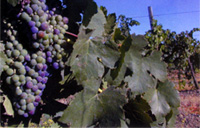
livermore_grapesOther wineries bring their own special charm to the Livermore Valley. Tucked away in a grove of ancient pepper trees, is a little giant called Retzlaff. Not only are these boutique wines extraordinary, they are all organic–made by hand from grapes grown on site with no fertilizers, herbicides or pesticides. How do owners Bob and Gloria Retzlaff do it? Naturally. They put up a hawk house and a hawk moved in to prey on the Starlings. The built an owl roost and the owls keep the gophers and mice at bay. So do the vineyard cats and the couple’s border collie. It works beautifully, as Retzlaff has some of the tastiest wines and most charming picnic grounds in the Livermore Valley. Open to the public, they host annual events for Mothers and Fathers Day, the Fourth of July, and a homegrown celebration called the “Howl at the Moon Dinner” on September 13th. Retzlaff Vineyards is located at 1356 S. Livermore Avenue. Open for tasting Tuesday Friday from 12-2 and weekends from 12-4:30.

No trip to this region would be complete without visiting Concannon–a vineyard that goes back to Livermore’s early wine making days. While Robert Livermore planted the first commercial vines in the 1840s, pioneer winemakers C.H. Wente, Charles Wetmore and James Concannon founded the first wineries in the early 1880s. They were the first to bottle varietally labeled Chardonnay, Sauvignon Blanc and Petite Sirah. Concannon is still going strong today, producing award-winning wines at its historic site at 4590 Tesla Road. They offer tasting daily from 11-4:30.

The Livermore Valley Wine Country has over 5,000 acres of vineyards today, with over 24 wineries and a number of top notch golf courses. Laced between acres of new high end homes, you may be tempted to relocate here. As the sign says–“If you lived here, you’d be home now”. Home amongst the vineyards and some of California’s oldest and most flavorful wines. For more information, log onto www.livermorewine.com or contact the Tri-Valley Convention and Visitors Bureau at 1-888-874-9253.

The World is Frederica Von Stade’s Stage, But Alameda is Home

Alameda Magazine, November/December 2002

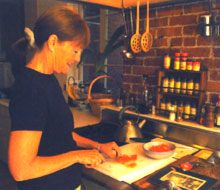
On a stately, tree-lined street, not far from roads named for famous composers, lives a music legend. Frederica von Stade moves comfortably across her big, breezy kitchen to the whistling tea kettles and pours a cup of morning nectar for the voice — and the soul.

Flicka in her kitchen

Flicka in her kitchen

Outside, the Tibetan prayer cloths hanging on the balcony spread their blessings over the house, a century-old Tudor with all the charm you’d expect for a star of von Stade’s stature. But what you don’t expect is her zest for simple living.

“Call me Flicka,” says the woman with the warm mezzo soprano voice. I brushed any connection to horses out of my mind. I was wrong.

“I was named after my father’s polo pony,” she smiled. “The show, ‘My Friend Flicka’ was big at the time.” This could explain von Stade’s strong connection to animals — she has several dogs and cats in the house these days. Just part of the family that includes five children and two grandchildren that comes and goes.

For 35 years, Flicka has captivated audiences all over the world as one of the great opera stars of our time. Her life with the Metropolitan Opera has been a whirlwind of performances, on stage and on broadcasts. But as she approaches 60, Flicka finds her greatest joy is staying home. The harmony she creates with her husband, Mike Gorman, (one of the founders of the Bank of Alameda) matches that of any symphony.

So we sip from our mugs and chat like girlfriends about family and music and the incredible, resilient spirit. “I have a singing lesson later today and then lunch with my daughter,” Flicka says, noticing the surprised look on my face. A woman with six Grammy nominations and dozens of recordings takes voice lessons?

“She’s a marvelous teacher named Jane Randolph, in the Oakland Hills. She knows the true nature of singing and all its wonder — its lightness, its relation to the soul,” she says, almost dreamily.

As the light streams in through the adjacent sun-porch, I notice a green bicycle — a beach cruiser splashed with white paint. “I love that bike,” Flicka shares. “I did that because I was afraid someone would steal it.” Then she showed me the “golf bag” Mike fashioned out of duct tape and PVC pipe near her back fender. A 20-minute ride and she can play the short nine and Alameda’s public course.

“Golf is like singing,” says the woman who would know better than most. “Between addressing your ball and the back-swing are probably 5,000 thoughts and between standing on stage and hearing the first chord of the piano are about 5,000 thoughts. Your job is to control those thoughts.” No problem with the singing, but Flick admits that golf gives her fits.

“My game is so horrible, I don’t want to blow a hundred bucks on a private course,” she laughs.

Cooking is another hobby that many singers enjoy. It comes naturally to Flicka, who’s mother was a caterer. “I can cook fo the masses,” she laughs. “And I do, every Sunday when the kids come over for dinner.” You can almost hear the laughter as you look at the long dining room table, adorned with a handmade centerpiece from one of the grandchildren.

“Mike does the barbecue and I try out vegetarian dishes on everyone,” she says.

After dinner the family retires to the music room to hear Flicka sing, right? Wrong.

“They’re tired of hearing me,” she laughs, adding she saves that for house concerts she hosts as fund-raisers. A favorite charity is the alameda Education Foundation, which subsidizes music in the public schools. Flicka also supports programs that provide music for at-risk kids.

“I don’t know anything about how to solve some of the problems in this country, but I feel strongly that if we begin with children, we have a chance,” she says. As the singer cuts back on traveling and performances, she sees herself teaching music to pre-schoolers and teens.

With a life so rich and full of people and activities, where does a renowned opera start find time to practice?

“I sing around the house all day” she reveals. Even on the treadmill.

“I learn music during my morning workouts — so I won’t be bored out of my mind.” An hour of singing opera on the treadmill and anyone else would be thinking oxygen, not breath control.

Hall of Fame Raider, Dave Casper

Diablo Magazine, August 2002

Moving back to the East Bay isn’t big news- unless you’re legendary Raider’s tight end Dave Casper. “The ghost” is Alamo’s newest celebrity citizen – and will be inducted into the Pro Football Hall of Fame on August 3.

Dave Casper

Dave Casper

Known for the “supernatural” way he caught those Kenny Stabler passes in the 1970’s (not to mention sharing a surname with a cartoon apparition), Casper is just the 13th Raider to be immortalized in Canton, Ohio.”I was fortunate that some of the plays I made kept my name in front of the people,” says the former Notre Dame All-American. Plays like his 1977 game-winning touchdown dubbed “the holy roller” where he kicked a loose ball at the five-yard line and fell on it in the end zone.

These days, Casper plays in the financial arena – where he suits up as managing director of the Walnut Creek office for Northwestern Mutual Financial Network. “The office opened up just when I was thinking of returning to the Bay Area from Minneapolis,” he says. Casper admits his silver and black celebrity status didn’t mean as much in Minnesota as it does in the East Bay.. “[Minnesotans] still remember that Raiders win over the Vikings in the Super Bowl,” he laughs.

Good Guys’ CEO Ken Weller

Alameda Living Magazine, August/September/October 2002

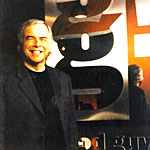
There’s a new man in town – a straight shooter with a keen eye for business. He’s one of the good guys. In fact – he’s the head of Good Guys Electronics – CEO Ken Weller.

When Weller took over as president of the struggling retailer in September of 2000, he cut overhead by moving the company headquarters from Brisbane to Alameda’s Harbor Bay Business Park. But money isn’t the only thing on this man’s mind. His playful sense of humor and zest for life make him one of California’s most candid executives.

Good Guys' CEO Ken Weller

Ken Weller

Q: Growing up in Oxford, England, what made you move to the U-S?

A: I was dating an American. She was vice consul to Haiti. I went there and did some volunteer work for Mother Teresa’s organization before coming to California. I was good at treating wounds because as a kid I rode race horses. In Haiti, we would literally pick people up right off the sidewalk and they’d come and die in the hospice. Part of it was making people feel comfortable so they could die with dignity.

Q: You said you rode horses. Were you a jockey?

A: I was an amateur jockey. I did that for 7 years and rode for the richest man in the world at the time.

Q: So when did you move to California?

A: In the early 80’s. I thought I was going to be here for a couple of years, find myself a part time job, play golf and ski a little. Then I joined Good Guys as a product salesperson in our Concord store. The stupidest thing I ever did was to take a promotion.

Q: Why do you say that?

A: The company spent money advertising and customers came in the door and I earned commissions when I sold them things. That’s a pretty good life. You go home at night with no worries, no stress.

Q: So you moved up to management?

A: Assistant manager and then store manager. I made my reputation turning stores around. I always remember my boss telling me “Boy, you seem to be lucky – you’ve been to 3 or 4 of these stores and everywhere you go you get lucky.” And I said – “you know what? Maybe it’s not luck.” It really pissed me off.

Q: Financially, how does Good Guys look today?

A: I really believe that Good Guys is in the sweet spot of the electronics industry. There’s a lot of new technology – even in television. This whole idea of running lots of things in your home – if you had asked me 2 years ago, I’d have said that was going to happen through the computer. Today I think it’s generally excepted it’s going to happen through the digital television.

Q: So is your own home high tech?

A: Not particularly. But I love music. The joke around the company is that I always break into song. If I could have asked God for more talent, it would have been singing – and golf.

Q: You know, you can’t have everything.

A: I know – and do you know the beauty of all this for me? If it all finished tomorrow – I’d have still had a charmed life.

With annual sales of more than $800 million, Good Guys is the largest specialty retailer of higher-end consumer entertainment electronics in the nation.

Brooks Island

Diablo Magazine, June 2002

Wanted: someone to live on a windswept island in San Francisco Bay. Must love nature and isolation. Need strong survivor skills and sturdy boat.

Roy Tedder and Heather Hailey

Roy Tedder and Heather Hailey

Roy Tedder and Heather Hailey are the “survivors” who accepted this job – as caretakers of Brooks Island. Sixty five acres of rock and sand – home to the East Bay Regional Park District’s only wildlife sanctuary.

Soul-mates, Roy and Heather live their lives by the tides – which they check daily before heading ashore to do chores. Groceries and laundry, propane and more get transported by motorboat from the Richmond Marina to their modest island home. A sudden storm and the couple is stranded, sometimes for days as heavy winds whip the choppy waters.

Brooks Island is rich with history. Legend has it gold is buried here. Cellblocks at Alcatraz Prison were built with this island’s rock and Bing Crosby and Trader Vic once owned a gun club here.

You need a permit to visit Brooks and the park district offers beginning kayak trips to the island. Sign up, and you may meet the couple’s 50 year old oyster named “Oscar”. The stories he could tell – if only he’d “come out of his shell”.

Montclair Malt Shop

Diablo Magazine, May 2002

Got pickles? The Montclair Malt Shop does – and they’re giving them away to pregnant women. Big, juicy dills, just waiting to be crunched – with a side of ice cream.

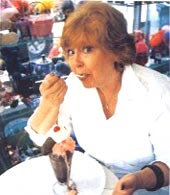
Maurine Marie

Maurine Marie

It’s not for the faint of palate. In fact, some young women today haven’t heard of the pickles and ice cream craving of their mother’s generation. But owner Maurine Marie remembers. “About a year ago, I decided to put up a hand-written sign offering pregnant women a free pickle with their ice cream order.” Soon she had her first nibble – a customer with such raging hormones she ordered two Mango Banana Smoothies at a time – with pickles on top. “The pickles were so huge, they wouldn’t float on top so I put them in cups” says Marie.

Seems the middle trimester is prime time for food-craving expectant mothers to succumb to temptation and indulge in this love affair with sour and sweet. Women in their first trimester don’t usually have the stomach for such experimental cuisine, and by the final three months of the pregnancy, they’re getting serious about cutting back on calories. But during months four-to-six: Pucker up, baby!

Getting A Taste of the Luck of the Irish

It’s dusk in Ireland, and I’m looking out over the River Shannon. The steel gray waters that Frank McCourt called “a killer” in his heart-wrenching book “Angela’s Ashes” run clear, now, through Limerick City. There’s still a hard edge to this industrial port, but swans now float on a Shannon once strewn with garbage. Flowers cascade from boxes in the windows of the old brick row houses.

“We were plenty mad when McCourt wrote his book,” said one local as we chatted on the sidewalk in front of my room at the Jury’s Inn. “We all had that kind of childhood back then. You get over it and move on,” he said in an Irish brogue that ran thick like honey.

McCourt’s memoirs may not have helped the image of Ireland’s fourth largest city, but it is bringing tourists, eager to share in the sorrow of a town that was down on its luck for so long. It brought me here, to see the pub where McCourt’s pa drank away his government assistance, the national school where teachers regularly “knocked sense” into their young students and the dreaded River Shannon, which McCourt blamed for the Tuberculosis that killed 2 of his siblings. How times have changed, not just in Limerick, but all over Ireland. The country is shining, these days, with the glint of millions of Euros being spent by tourists and locals alike. But in order to be accurate about Ireland today, I need to go back to my arrival on these dew-kissed shores on the weekend of the 4th of July.

Flying into Shannon on US Airways, I board the bus to Galway. One of Europe’s fastest growing cities, Galway is known for its music and vibrant nightlife. It’s perfect for me, as my flute is in tow and I hope to join in a few Irish jams (or sessions, as they call them.) But before I play one note, I need a nap. Settling into my room at the Salt Hill Hotel, I fall fast asleep till a rumbling sound shakes me from my covers. Screaming past my window over Galway Bay are dozens of military jets from Ireland, the UK and America, practicing for a huge air show the next day.

“We love Americans,” says a ruddy-faced local in the pub that night, with a seriousness that wanes with each Guinness he pours. Soon enough, I find myself playing the flute. Tommy Hayes and the boys are singing songs from our shores and someone shouts “let the lass play her music.” I sift through the musical scores of dozens of Elvis and John Denver songs and choose Green, Green Grass of Home. I play with every ounce of passion and vibrato I can muster, seeing the tears on the faces of more than a few men and women that night. When I finish, through the haze of a dozen burning cigarettes, I can see the pints lined up on my table. It’s their way of showing appreciation for a gal who had crossed the Atlantic to play her flute.

I arise the next morning to my first Irish meal – poached eggs and bacon and fresh fruit scones. There is something, too, called black and white pudding – little muffin-shaped patties that taste better when I dip them in catsup. I’m starting to see the extraordinary hospitality of the Irish, in their smiles and in what they are willing to do for my comfort. I want to see if the fish are the same way, a fairly ridiculous notion, but I have a theory. So I walk down the seaside promenade to the National Aquarium of Ireland. Sure enough, the petting pool is full of Thornback Rays who are craving a human massage. A freshly-scrubbed lad who works at the place even picks up a Bull Huss Shark and turns it on its back for a good rubdown. The shark has its eyes half closed with this look of pure bliss on its face. My suspicions are confirmed. If Ireland isn’t heaven – I am just outside the door.

Getting out of Salt Hill isn’t easy. A great crowd is starting to amass for the giant air show and the All-Irish Gaelic games which are just down the road. Some streets are blocked and bus service has stopped. Blessedly, a young man at the Salt Hill Hotel offers to drive me to the Galway bus station. I thank him profusely and buy my ticket for Dublin.

This brings me to the real purpose of my trip. To meet three women, only one of whom I know, under the old clock in the corner of the bar at the Shelbourne Hotel. We are coming thousands of miles to honor Jillian Quist, my writer friend with strong Irish roots and a milestone to celebrate. From this point on, I’ll call her Jillie and the other gals Affie and Sooze.

Arriving in Dublin, my next task is to wheel my suitcases up Grafton Street to St. Stephen’s Green. This is no easy act, navigating my way through the hoards of people who are shopping and meandering on this famous cobbled walkway. The lack of sleep and the strangeness of hearing dozens of different languages make the mile long trek so surreal. But I arrive just in time for my heralded meeting.

The energy in the air seems to crackle, as one by one, we arrive. Soon we are under the clock – the most prestigious place in the bar – drinking martinis at the Shelbourne. We are completely untethered from husband or child – as the Irish begins to come out in us. Jillian is the birthday girl, for whom turning fifty has become an event of international proportions. Having once hailed from the Emerald Isle, she has planned for us a most interesting odyssey.

“When the spirits go in, the truth comes out”. So goes the saying in Ireland, and while the Shelbourne has seen many a reunion, we seem to have made our mark. We leave with a dozen new friends and a more than a few business cards.

Squeezing into our little blue rental, we drive the hour south to the Bel Air Hotel in County Wicklow. Jilli has special memories of this place, having stayed here as a child. But nothing prepares us for the welcome we get when we arrive at the 15th century equestrian estate. “Come in and sit down, girls, and I’ll get you some drinks and grilled sandwiches,” says Fidelma Freeman, the kindly proprietor. She’s waited up for us, despite the lateness of the hour.

What happens next couldn’t be more perfect, if it were staged. Two guests of the manor, both local men, take it upon themselves to put on a show. They sing and dance and tell tall tales – all to our great amusement. I especially enjoy the kissing song, which is punctuated by two leprechaun-like pecks on my cheek. Sooze, an actress back home in St. Louis, is so caught up in the antics, she joins the men in a jig.

Up at the crack of noon the next day, we take our tea in the lobby of the grand old estate, where cattle graze just beyond the front door and horses prepare for the day’s ride. I bring my old Montana cowboy boots and jeans and assume I am ready. “We’ll have to take you out separately,” says the stable manager. The rest of the group, including Jilli, will be galloping wildly through the forests and meadows of Wicklow. In an English saddle, it is all I can do to hang on in a trot. But by the grace of St. Peter, I get out there and give it a go. Through the fields of Fox Glove and Clover I move to the rhythm of the steed. Up and down, clip and a clop, faster and faster I ride. I am high on a ridge overlooking green pastures and an ocean of azure and blue. I am doing what I’ve come here to do.

I am also popping Advil into the evening, nursing both a sore neck and now a sore bottom. But it does nothing to stop us from burning the midnight oil in Dublin’s famed Temple Bar district. Here, pubs like the Hairy Lemon and The Auld Dubliner play traditional Irish folk music late into the night. Fiddles and flutes and Elbow pipes stir the soul with the primal beat of the Bodhran drum. Some of the songs you will know, like “Dublin’s fair city…cockles and mussels, alive alive-oh”. But the ballad that brings us to our feet is the heartfelt ode to the beloved River Liffey. We dance round and round, arms linked and legs stepping high with strangers who feel like friends. It’s clear that the Irish love their rivers, and liken the Liffey to a beautiful woman who stirs the flames of passion.

We have good craic in Dublin that night. Craic is pronounced “crack” and is Gaelic for conversation. You’d have to be dead not to have good craic with the Irish. They love Americans and they love to talk. (Almost everyone in Ireland has a relative “in the states”. Many have been to the U-S, since it’s only a few hours by plane). Often, the stories you hear are of hardships, which were evident everywhere in Ireland until the recent economic boom. The Catholic Church is another favorite topic. Men have their stories of being “chosen” for priesthood and then falling from grace in the Seminary. “I was rescued by the lady with me tonight,” one man tells me. “She lured me from a life of celibacy,” he says with sparkling eyes. But more often than not, these days, it’s politics they’ll be talking about in the pubs of Ireland. If you engage in this topic, be prepared to stay awhile.

As prolific as the pubs, are the castles and ruins of Ireland. They’re part of the landscape, everywhere you go. On one misty day, in weather the Irish call “soft”, we explored the ruins of Glendalough, where St. Kevin built his monastery in 550 AD. From the round stone tower where the monks used to hide from invaders to the tiny cells where these early Christians lived, Glendalough is often called the cradle of religion in Ireland.

Every region has its castles, and some are open for touring and medieval meals. Malahide Castle is one of the favorites, only nine miles from Dublin with the only medieval hall in Ireland that’s preserved in its original form. It’s a picture-book palace surrounded by botanical gardens and parkland.

Steeped in Irish history is the long list of writers who’ve been born on these shores – men like Jonathan Swift, Oscar Wilde, W.B. Yeats, James Joyce, George Bernard Shaw, Samuel Beckett and Frank McCourt, to name a few. Their sayings are on many a pub wall and their books can be found in towns big and small. It was Wilde who wrote the words: “We’re all in the gutter, but some of us are looking at the stars,” a quote that seems to embody the spirit of Ireland. But to truly give life to these words, you should hear them spoken by the author, himself, or at least a good impersonator. The best place to do this is the Writer’s Museum in Dublin. Here you can see a one man show, where the actor reads passages from great Irish books, impersonating the authors and captivating the audience.

I would be remiss if I missed mentioning the gardens of Ireland. County Wicklow is renowned for its gardens and celebrates with a festival each May through July. The moist climate, tempered by the Gulf Stream and fertile, sun-kissed soil make Wicklow a lush land for greenery. Two of the county’s best gardens are Powerscourt and Mount Usher. Completely different in nature, Powerscourt is one of the great gardens of Europe, with fountains and ponds and antique sculptures, all laid out grandly in the shadow of the Sugarloaf Mountain. Mount Usher, on the other hand, is a relatively small natural garden – a more modest showing of nature along the banks of the River Vartry. It doesn’t attract the hoards of people that flock to Powerscourt and for that reason, it is truly a restorative place.

Among the many changes in Ireland is the food. You can still find the traditional Irish breakfast of cured ham, poached eggs and black and white pudding. But all over the cities and towns you will see restaurants serving everything from Italian to Chinese cuisine. We had a stunningly good meal in Ashford at Restaurant O Sole Mio, where the pasta was perfect and the vegetables were crisp and flavorful, not “done to a turn” like the Ireland of old. Curry is big in Ireland, and you’ll find it served with Fish and Chips at a multitude of “take away” cafes. But don’t make the mistake we made, and wait too late to eat dinner. While the sun is up until well after ten pm in the summertime, most restaurants and pubs stop serving food at 9:30.

Just a little about the traffic in Ireland, which can be quite bad in the environs around Dublin. With the high housing prices (that rival popular U-S cities) and a booming economy, more and more people are moving to suburbs. There’s highway construction all over the area, and traffic jams are now the norm – so avoid driving during peak commute times. Also, be prepared to get lost, as some new highways simply stop with no signs marking detours. It’s part of the price being paid for prosperity. But like everything else, it’s taken in stride. For the Irish are survivors and laughter and wit will carry them through.