Escape the Whining in the Wine Country

It’s the middle of July and the sounds of the season surround me. Nature’s symphony – with the birds and bees humming a soft summer tune. Children laughing, water splashing and time passing lazily by. Suddenly, there’s a low whining. It starts softly, then builds to a pitch that can’t be ignored. It’s a bird – it’s a plane – it’s the collective call of the kids, who after 5 weeks of summer cry “We’re bored”. That’s when you make your getaway.
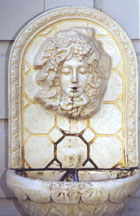
healdsburg_fountainSo here I am in Healdsburg, my favorite wine country town. Rolling hills laced with vineyards, the Russian River winding its way through the fertile valley and a cordial country village that’s more like Mayberry with Zin. In fact, the corner service station reflects the enthusiasm for wine in this town, with two kinds of gas – Chablis (unleaded) and Chardonnay (premium).

On a quiet corner, where stately shade trees give shelter to the streets below, is the Honor Mansion. Walk through the white picket gate with your bags and you slip back in time, to an era when hospitality was paramount. The parlor has fresh white linens and round the clock pastries and espresso. There’s food for the Koi pond outside, and the fish show their appreciation by loudly and enthusiastically kissing your hands. Couples kiss here too, for the grounds are exquisitely romantic and private – with benches in the most hidden of places. But for me, it’s the perfect place to write, with a glass of Sonoma County wine never more than an arm’s length away.

Despite my relaxed state of mind, I am getting exercise. I took a wonderful bike ride with Getaway Adventures out of Calistoga, where we rode through the countryside in the bosom of Mount Saint Helena. This is a unique way to see the wineries and cool off in the air conditioned tasting rooms. Bikers usually catch the big natural attraction here, too – the Old Faithful Geyser, which blows its top about every 20 minutes or so. The sign out front still exclaims “As featured in National Geographic”.

healdsburg_roomLunch at Healdsburg’s Costeaux Bakery is always a treat, and I’m not the only one who thinks so. When the big boys in the Bohemian Club fly in for their annual Russian River summer camp, Costeaux stocks the food for their private planes. Powerful politicians and billionaire businessmen know how to take care of themselves – and so do I. It’s like the note-card said in my suite at the Honor Mansion: “we’ve turned down your bed, anticipating you may want to indulge in an afternoon nap.” And you know what? I Don’t mind if I do.

Photos by Lee Dailey

Flame On, Olympic Fever

Flame on, Olympic fever. Just months after we shared the thrills and chills of Park City’s Winter games, San Francisco is hot to host the summer games of 2012. Pardon me if I yawn. Sure the games will be good for Bay Area business, and Oakland will get some of the spill over. But the summer games seem tame to me, compared to the teeth chattering, bone chilling fun you can have in winter. I know this first hand, having just returned from Park City and the site of the 2002 winter games.

Just a 90 minute Southwest Airlines flight from Oakland, Salt Lake City is a breeze to get to. Hop on a shuttle and 45 minutes later you’re in the Wasatch Mountain Range and surrounded by 7 of the west’s most popular ski resorts.

skiing_photoOlympic Park should be your first stop. For 7 dollars a person (kids and seniors are less) you can tour the site of last winter’s Olympic bobsled, luge and skeleton competitions. You can watch world class Nordic ski jumpers train year round. You can even try jumping yourself, with camps that range in price from 75 dollars (1-day) to 300 dollars (6-day). You start off doing flips on a trampoline, and then graduate to flips off a little ski ramp and into a big pool of bubbling water. The bubbles break the fall, providing a cushion for jumpers who hit the water, arms flailing and skis akimbo. That would be me.

In an era where Americans keep pushing themselves to try new experiences, ski jumping is not all that extreme. But what about bobsledding? For 80 dollars, you can go down the Olympic bobsled run. This is not for the faint of heart. It is the most violent, jaw-dropping, bone knocking ride you can imagine. And at speeds of up to 70 mph, it’s a blast. Totally unrealistic, though, if you’re thinking of someday competing in this event. Bobsled training starts early – in those formative years when kids are fearless. Not appropriate for an aging boomer. For us – the Skeleton is a better choice. This is an event you can actually learn in one inexpensive training session at Olympic Park. Really! They outfit you with a special suit, a heavy duty helmet and sled – just like the “big dogs” use. Block out the fact that your face is an inch from the ground as you fly on your belly around hair pin curves. That’s what the chin strap is for.

If all this is too extreme for you – there are other options. I took the most gentle hot air balloon ride on my visit to Park City. We glided gracefully on pockets of air, over rolling fields of alfalfa. It’s a breathtaking way to see the mountains and valleys around Salt Lake City.

If mountain biking appeals to you, but you’re a little apprehensive about it – try Deer Valley. Unlike other resorts, they offer a 3 hour clinic that teaches you those subtle little nuances of the sport, like how to use your brakes so you don’t fly over the handlebars. They rate their trails here, and by the end of your clinic you should be ready to load your bike on the chair lift and traverse down an intermediate ski hill. Only the mad bombers go straight down – and they’re covered in padding from head to toe.

Then there’s the Alpine Slide at nearby Park City Mountain Resort. Much like a bobsled run with built up sides and straightaway, you take your sled up the chairlift and put it down on a specially designed track. You control the speed and fly around the corners as fast or as slow as you dare. At 9 dollars a pop, this is a wild ride that adults and kids can enjoy on the ski hill in summer.

The 2002 Winter Olympics have forever changed Park City and its surrounding area. They have world class training facilities now, which American athletes will use for decades to come. We can use them too – making Utah one of the best family vacation destinations in any season.

Greetings from Sequoia National Park

Greetings from Sequoia National Park. With opening lines like that, I should be writing postcards. But then, I’d have no room to pontificate about the most peaceful place I’ve seen in years.

Sequoia is California’s oldest National Park – and yet, the land management ideas here are revolutionary. The belief that a national treasure can be “loved to death” has been taken to heart, and some major changes have been made in the last few years.

Gone are the 282 buildings that were choking the world’s largest and oldest Sequoia trees. These decaying structures were torn down and the Giant Forest is being restored to its natural beauty with a wonderful interactive museum now on the site.

A year ago, President Bush visited this park. He was the first sitting president to come here and he stayed where I am staying this week – in the new Wuksachi Village. Four hours from Oakland and just 45 minutes from the Highway 180 entrance to the park, Wuksachi has 102 guest rooms and a warm, inviting lodge with exceptional food and drink. From here, you’re close to waterfall trails, the Crystal Caves, and of course, Mount Whitney – the highest point in the contiguous United States. It’s the beauty of Yosemite without the crowds.

Then there’s something so awesome, you need to see it to believe it. A seedling when cavemen roamed the earth, The General Sherman Sequoia is the world’s largest living tree. It was a giant when Christ was born and it could live in this national park another 1300 years if we don’t mess things up. In the words of John Muir: “We, as stewards, have an awesome responsibility. Imagine what will be here for our children if we fail.”

After this week’s visit, I feel certain the caretakers of Sequoia National Park are on the right track.

The Warm Hearts Of Christmas

They call this the season of giving. But it’s not just presents being exchanged. Perhaps more than ever, hills folks are offering their help to the victims of poverty, abuse and disaster. Here are some of their stories:

Mel Copland grew up in Montclair. He’s a realtor and a builder and as long as I’ve known him, he’s been a can-do kind of guy. When the Oakland firestorm hit, he was out spraying rooftops and digging trenches. He was one of the first men to volunteer after the Loma Prieta earthquake in 1989. And during the recent spate of hurricanes, he flew to Texas to help the Red Cross for three weeks. Sleeping on the floor of a church with no power and no hot water, you would think he’d be burned out on volunteering for awhile. But he says he can’t wait to help out again, especially in the Bay Area. Needless to say, Mel’s number is at the top of my speed dial.

Rosalie Masuda is a nurse and avid hills tennis player, who just couldn’t rest after Hurricane Katrina hit. She flew into the Dallas/Fort Worth area and took charge of a shelter, treating victims for everything from dehydration to depression. And the depression was worse than the injuries, she said.

“I remember a 71-year-old gentleman who looked daily for two weeks on the Red Cross computer system for his wife, who was placed on a different bus than he. A local attorney hearing about his plight hired a private investigator and located her in Houston in a nursing home,” she recalls. “They were united and he had a cardiac arrest that same week at the shelter.”

After many long days and restless nights, Masuda was grateful to come home to family and friends, who, in return, gave her a wonderful welcome home party.

Justin Miller grew up in Montclair, went to high school at Saint Mary’s and joined the Peace Corps. Now he’s working in Mexico, doing disaster evaluations in 10 tiny villages hit by Hurricane Stan. His mother, Gabby, says the area was cut off by mudslides and the corps went as far as they could by jeep, then traversed rugged mountains for days on end.

“At one point, unable to reach a village before dark, they stumbled about and lost their way, until they found a mountain hut where they spent the night,” she recalls. Dirty and cold, her son and his group huddled together in high winds and below freezing temperatures until sunrise.

“The people in the next village were relieved the next day to see that they had survived, and not fallen into some ravine.” In fact, the villagers were so grateful for the corps’ help, they were made guests of honor at a family Quinseanera.

And while we’re on the subject of local boys making good — Scot Gordon is a young man who I once helped with a broadcast internship. He was a sharp kid who learned quickly and showed great poise and maturity for someone in high school.

He’s gone on to run his own business in Orinda (Quenchers) and start a foundation called ENABLE. One of their projects is helping to modernize a medical facility in Uburu, Nigeria. Scot has secured the help of Dr. John Gentile, the director of medical affairs for Alta Bates and Summit hospitals, who is rounding up medicine, equipment and other supplies. He’s got Cal Evans with Von Hoffman Publishing finding medical textbooks for the hospital. And he’s trying to line up power sources, since the doctors often work by the dim light of a small hand-cranked generator.

“There are several families who live right around here who are from Uburu,” Scot says, and “these guys are amazing — they have PhDs and masters’ degrees, but some of them are collecting toll on the Bay Bridge just to send money home.”

I’m proud to be able to tell the stories of these generous neighbors. It warms my heart at Christmas time. The message of hope is as strong as ever. Peace on Earth, good will toward men.