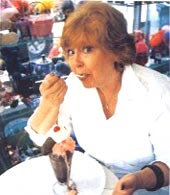
Good Guys’ CEO Ken Weller

Alameda Living Magazine, August/September/October 2002

There’s a new man in town – a straight shooter with a keen eye for business. He’s one of the good guys. In fact – he’s the head of Good Guys Electronics – CEO Ken Weller.

When Weller took over as president of the struggling retailer in September of 2000, he cut overhead by moving the company headquarters from Brisbane to Alameda’s Harbor Bay Business Park. But money isn’t the only thing on this man’s mind. His playful sense of humor and zest for life make him one of California’s most candid executives.

Good Guys' CEO Ken Weller

Ken Weller

Q: Growing up in Oxford, England, what made you move to the U-S?

A: I was dating an American. She was vice consul to Haiti. I went there and did some volunteer work for Mother Teresa’s organization before coming to California. I was good at treating wounds because as a kid I rode race horses. In Haiti, we would literally pick people up right off the sidewalk and they’d come and die in the hospice. Part of it was making people feel comfortable so they could die with dignity.

Q: You said you rode horses. Were you a jockey?

A: I was an amateur jockey. I did that for 7 years and rode for the richest man in the world at the time.

Q: So when did you move to California?

A: In the early 80’s. I thought I was going to be here for a couple of years, find myself a part time job, play golf and ski a little. Then I joined Good Guys as a product salesperson in our Concord store. The stupidest thing I ever did was to take a promotion.

Q: Why do you say that?

A: The company spent money advertising and customers came in the door and I earned commissions when I sold them things. That’s a pretty good life. You go home at night with no worries, no stress.

Q: So you moved up to management?

A: Assistant manager and then store manager. I made my reputation turning stores around. I always remember my boss telling me “Boy, you seem to be lucky – you’ve been to 3 or 4 of these stores and everywhere you go you get lucky.” And I said – “you know what? Maybe it’s not luck.” It really pissed me off.

Q: Financially, how does Good Guys look today?

A: I really believe that Good Guys is in the sweet spot of the electronics industry. There’s a lot of new technology – even in television. This whole idea of running lots of things in your home – if you had asked me 2 years ago, I’d have said that was going to happen through the computer. Today I think it’s generally excepted it’s going to happen through the digital television.

Q: So is your own home high tech?

A: Not particularly. But I love music. The joke around the company is that I always break into song. If I could have asked God for more talent, it would have been singing – and golf.

Q: You know, you can’t have everything.

A: I know – and do you know the beauty of all this for me? If it all finished tomorrow – I’d have still had a charmed life.

With annual sales of more than $800 million, Good Guys is the largest specialty retailer of higher-end consumer entertainment electronics in the nation.

Brooks Island

Diablo Magazine, June 2002

Wanted: someone to live on a windswept island in San Francisco Bay. Must love nature and isolation. Need strong survivor skills and sturdy boat.

Roy Tedder and Heather Hailey

Roy Tedder and Heather Hailey

Roy Tedder and Heather Hailey are the “survivors” who accepted this job – as caretakers of Brooks Island. Sixty five acres of rock and sand – home to the East Bay Regional Park District’s only wildlife sanctuary.

Soul-mates, Roy and Heather live their lives by the tides – which they check daily before heading ashore to do chores. Groceries and laundry, propane and more get transported by motorboat from the Richmond Marina to their modest island home. A sudden storm and the couple is stranded, sometimes for days as heavy winds whip the choppy waters.

Brooks Island is rich with history. Legend has it gold is buried here. Cellblocks at Alcatraz Prison were built with this island’s rock and Bing Crosby and Trader Vic once owned a gun club here.

You need a permit to visit Brooks and the park district offers beginning kayak trips to the island. Sign up, and you may meet the couple’s 50 year old oyster named “Oscar”. The stories he could tell – if only he’d “come out of his shell”.

Montclair Malt Shop

Diablo Magazine, May 2002

Got pickles? The Montclair Malt Shop does – and they’re giving them away to pregnant women. Big, juicy dills, just waiting to be crunched – with a side of ice cream.

Maurine Marie

Maurine Marie

It’s not for the faint of palate. In fact, some young women today haven’t heard of the pickles and ice cream craving of their mother’s generation. But owner Maurine Marie remembers. “About a year ago, I decided to put up a hand-written sign offering pregnant women a free pickle with their ice cream order.” Soon she had her first nibble – a customer with such raging hormones she ordered two Mango Banana Smoothies at a time – with pickles on top. “The pickles were so huge, they wouldn’t float on top so I put them in cups” says Marie.

Seems the middle trimester is prime time for food-craving expectant mothers to succumb to temptation and indulge in this love affair with sour and sweet. Women in their first trimester don’t usually have the stomach for such experimental cuisine, and by the final three months of the pregnancy, they’re getting serious about cutting back on calories. But during months four-to-six: Pucker up, baby!

Getting A Taste of the Luck of the Irish

It’s dusk in Ireland, and I’m looking out over the River Shannon. The steel gray waters that Frank McCourt called “a killer” in his heart-wrenching book “Angela’s Ashes” run clear, now, through Limerick City. There’s still a hard edge to this industrial port, but swans now float on a Shannon once strewn with garbage. Flowers cascade from boxes in the windows of the old brick row houses.

“We were plenty mad when McCourt wrote his book,” said one local as we chatted on the sidewalk in front of my room at the Jury’s Inn. “We all had that kind of childhood back then. You get over it and move on,” he said in an Irish brogue that ran thick like honey.

McCourt’s memoirs may not have helped the image of Ireland’s fourth largest city, but it is bringing tourists, eager to share in the sorrow of a town that was down on its luck for so long. It brought me here, to see the pub where McCourt’s pa drank away his government assistance, the national school where teachers regularly “knocked sense” into their young students and the dreaded River Shannon, which McCourt blamed for the Tuberculosis that killed 2 of his siblings. How times have changed, not just in Limerick, but all over Ireland. The country is shining, these days, with the glint of millions of Euros being spent by tourists and locals alike. But in order to be accurate about Ireland today, I need to go back to my arrival on these dew-kissed shores on the weekend of the 4th of July.

Flying into Shannon on US Airways, I board the bus to Galway. One of Europe’s fastest growing cities, Galway is known for its music and vibrant nightlife. It’s perfect for me, as my flute is in tow and I hope to join in a few Irish jams (or sessions, as they call them.) But before I play one note, I need a nap. Settling into my room at the Salt Hill Hotel, I fall fast asleep till a rumbling sound shakes me from my covers. Screaming past my window over Galway Bay are dozens of military jets from Ireland, the UK and America, practicing for a huge air show the next day.

“We love Americans,” says a ruddy-faced local in the pub that night, with a seriousness that wanes with each Guinness he pours. Soon enough, I find myself playing the flute. Tommy Hayes and the boys are singing songs from our shores and someone shouts “let the lass play her music.” I sift through the musical scores of dozens of Elvis and John Denver songs and choose Green, Green Grass of Home. I play with every ounce of passion and vibrato I can muster, seeing the tears on the faces of more than a few men and women that night. When I finish, through the haze of a dozen burning cigarettes, I can see the pints lined up on my table. It’s their way of showing appreciation for a gal who had crossed the Atlantic to play her flute.

I arise the next morning to my first Irish meal – poached eggs and bacon and fresh fruit scones. There is something, too, called black and white pudding – little muffin-shaped patties that taste better when I dip them in catsup. I’m starting to see the extraordinary hospitality of the Irish, in their smiles and in what they are willing to do for my comfort. I want to see if the fish are the same way, a fairly ridiculous notion, but I have a theory. So I walk down the seaside promenade to the National Aquarium of Ireland. Sure enough, the petting pool is full of Thornback Rays who are craving a human massage. A freshly-scrubbed lad who works at the place even picks up a Bull Huss Shark and turns it on its back for a good rubdown. The shark has its eyes half closed with this look of pure bliss on its face. My suspicions are confirmed. If Ireland isn’t heaven – I am just outside the door.

Getting out of Salt Hill isn’t easy. A great crowd is starting to amass for the giant air show and the All-Irish Gaelic games which are just down the road. Some streets are blocked and bus service has stopped. Blessedly, a young man at the Salt Hill Hotel offers to drive me to the Galway bus station. I thank him profusely and buy my ticket for Dublin.

This brings me to the real purpose of my trip. To meet three women, only one of whom I know, under the old clock in the corner of the bar at the Shelbourne Hotel. We are coming thousands of miles to honor Jillian Quist, my writer friend with strong Irish roots and a milestone to celebrate. From this point on, I’ll call her Jillie and the other gals Affie and Sooze.

Arriving in Dublin, my next task is to wheel my suitcases up Grafton Street to St. Stephen’s Green. This is no easy act, navigating my way through the hoards of people who are shopping and meandering on this famous cobbled walkway. The lack of sleep and the strangeness of hearing dozens of different languages make the mile long trek so surreal. But I arrive just in time for my heralded meeting.

The energy in the air seems to crackle, as one by one, we arrive. Soon we are under the clock – the most prestigious place in the bar – drinking martinis at the Shelbourne. We are completely untethered from husband or child – as the Irish begins to come out in us. Jillian is the birthday girl, for whom turning fifty has become an event of international proportions. Having once hailed from the Emerald Isle, she has planned for us a most interesting odyssey.

“When the spirits go in, the truth comes out”. So goes the saying in Ireland, and while the Shelbourne has seen many a reunion, we seem to have made our mark. We leave with a dozen new friends and a more than a few business cards.

Squeezing into our little blue rental, we drive the hour south to the Bel Air Hotel in County Wicklow. Jilli has special memories of this place, having stayed here as a child. But nothing prepares us for the welcome we get when we arrive at the 15th century equestrian estate. “Come in and sit down, girls, and I’ll get you some drinks and grilled sandwiches,” says Fidelma Freeman, the kindly proprietor. She’s waited up for us, despite the lateness of the hour.

What happens next couldn’t be more perfect, if it were staged. Two guests of the manor, both local men, take it upon themselves to put on a show. They sing and dance and tell tall tales – all to our great amusement. I especially enjoy the kissing song, which is punctuated by two leprechaun-like pecks on my cheek. Sooze, an actress back home in St. Louis, is so caught up in the antics, she joins the men in a jig.

Up at the crack of noon the next day, we take our tea in the lobby of the grand old estate, where cattle graze just beyond the front door and horses prepare for the day’s ride. I bring my old Montana cowboy boots and jeans and assume I am ready. “We’ll have to take you out separately,” says the stable manager. The rest of the group, including Jilli, will be galloping wildly through the forests and meadows of Wicklow. In an English saddle, it is all I can do to hang on in a trot. But by the grace of St. Peter, I get out there and give it a go. Through the fields of Fox Glove and Clover I move to the rhythm of the steed. Up and down, clip and a clop, faster and faster I ride. I am high on a ridge overlooking green pastures and an ocean of azure and blue. I am doing what I’ve come here to do.

I am also popping Advil into the evening, nursing both a sore neck and now a sore bottom. But it does nothing to stop us from burning the midnight oil in Dublin’s famed Temple Bar district. Here, pubs like the Hairy Lemon and The Auld Dubliner play traditional Irish folk music late into the night. Fiddles and flutes and Elbow pipes stir the soul with the primal beat of the Bodhran drum. Some of the songs you will know, like “Dublin’s fair city…cockles and mussels, alive alive-oh”. But the ballad that brings us to our feet is the heartfelt ode to the beloved River Liffey. We dance round and round, arms linked and legs stepping high with strangers who feel like friends. It’s clear that the Irish love their rivers, and liken the Liffey to a beautiful woman who stirs the flames of passion.

We have good craic in Dublin that night. Craic is pronounced “crack” and is Gaelic for conversation. You’d have to be dead not to have good craic with the Irish. They love Americans and they love to talk. (Almost everyone in Ireland has a relative “in the states”. Many have been to the U-S, since it’s only a few hours by plane). Often, the stories you hear are of hardships, which were evident everywhere in Ireland until the recent economic boom. The Catholic Church is another favorite topic. Men have their stories of being “chosen” for priesthood and then falling from grace in the Seminary. “I was rescued by the lady with me tonight,” one man tells me. “She lured me from a life of celibacy,” he says with sparkling eyes. But more often than not, these days, it’s politics they’ll be talking about in the pubs of Ireland. If you engage in this topic, be prepared to stay awhile.

As prolific as the pubs, are the castles and ruins of Ireland. They’re part of the landscape, everywhere you go. On one misty day, in weather the Irish call “soft”, we explored the ruins of Glendalough, where St. Kevin built his monastery in 550 AD. From the round stone tower where the monks used to hide from invaders to the tiny cells where these early Christians lived, Glendalough is often called the cradle of religion in Ireland.

Every region has its castles, and some are open for touring and medieval meals. Malahide Castle is one of the favorites, only nine miles from Dublin with the only medieval hall in Ireland that’s preserved in its original form. It’s a picture-book palace surrounded by botanical gardens and parkland.

Steeped in Irish history is the long list of writers who’ve been born on these shores – men like Jonathan Swift, Oscar Wilde, W.B. Yeats, James Joyce, George Bernard Shaw, Samuel Beckett and Frank McCourt, to name a few. Their sayings are on many a pub wall and their books can be found in towns big and small. It was Wilde who wrote the words: “We’re all in the gutter, but some of us are looking at the stars,” a quote that seems to embody the spirit of Ireland. But to truly give life to these words, you should hear them spoken by the author, himself, or at least a good impersonator. The best place to do this is the Writer’s Museum in Dublin. Here you can see a one man show, where the actor reads passages from great Irish books, impersonating the authors and captivating the audience.

I would be remiss if I missed mentioning the gardens of Ireland. County Wicklow is renowned for its gardens and celebrates with a festival each May through July. The moist climate, tempered by the Gulf Stream and fertile, sun-kissed soil make Wicklow a lush land for greenery. Two of the county’s best gardens are Powerscourt and Mount Usher. Completely different in nature, Powerscourt is one of the great gardens of Europe, with fountains and ponds and antique sculptures, all laid out grandly in the shadow of the Sugarloaf Mountain. Mount Usher, on the other hand, is a relatively small natural garden – a more modest showing of nature along the banks of the River Vartry. It doesn’t attract the hoards of people that flock to Powerscourt and for that reason, it is truly a restorative place.

Among the many changes in Ireland is the food. You can still find the traditional Irish breakfast of cured ham, poached eggs and black and white pudding. But all over the cities and towns you will see restaurants serving everything from Italian to Chinese cuisine. We had a stunningly good meal in Ashford at Restaurant O Sole Mio, where the pasta was perfect and the vegetables were crisp and flavorful, not “done to a turn” like the Ireland of old. Curry is big in Ireland, and you’ll find it served with Fish and Chips at a multitude of “take away” cafes. But don’t make the mistake we made, and wait too late to eat dinner. While the sun is up until well after ten pm in the summertime, most restaurants and pubs stop serving food at 9:30.

Just a little about the traffic in Ireland, which can be quite bad in the environs around Dublin. With the high housing prices (that rival popular U-S cities) and a booming economy, more and more people are moving to suburbs. There’s highway construction all over the area, and traffic jams are now the norm – so avoid driving during peak commute times. Also, be prepared to get lost, as some new highways simply stop with no signs marking detours. It’s part of the price being paid for prosperity. But like everything else, it’s taken in stride. For the Irish are survivors and laughter and wit will carry them through.
Escape the Whining in the Wine Country

It’s the middle of July and the sounds of the season surround me. Nature’s symphony – with the birds and bees humming a soft summer tune. Children laughing, water splashing and time passing lazily by. Suddenly, there’s a low whining. It starts softly, then builds to a pitch that can’t be ignored. It’s a bird – it’s a plane – it’s the collective call of the kids, who after 5 weeks of summer cry “We’re bored”. That’s when you make your getaway.

healdsburg_fountainSo here I am in Healdsburg, my favorite wine country town. Rolling hills laced with vineyards, the Russian River winding its way through the fertile valley and a cordial country village that’s more like Mayberry with Zin. In fact, the corner service station reflects the enthusiasm for wine in this town, with two kinds of gas – Chablis (unleaded) and Chardonnay (premium).

On a quiet corner, where stately shade trees give shelter to the streets below, is the Honor Mansion. Walk through the white picket gate with your bags and you slip back in time, to an era when hospitality was paramount. The parlor has fresh white linens and round the clock pastries and espresso. There’s food for the Koi pond outside, and the fish show their appreciation by loudly and enthusiastically kissing your hands. Couples kiss here too, for the grounds are exquisitely romantic and private – with benches in the most hidden of places. But for me, it’s the perfect place to write, with a glass of Sonoma County wine never more than an arm’s length away.

Despite my relaxed state of mind, I am getting exercise. I took a wonderful bike ride with Getaway Adventures out of Calistoga, where we rode through the countryside in the bosom of Mount Saint Helena. This is a unique way to see the wineries and cool off in the air conditioned tasting rooms. Bikers usually catch the big natural attraction here, too – the Old Faithful Geyser, which blows its top about every 20 minutes or so. The sign out front still exclaims “As featured in National Geographic”.

healdsburg_roomLunch at Healdsburg’s Costeaux Bakery is always a treat, and I’m not the only one who thinks so. When the big boys in the Bohemian Club fly in for their annual Russian River summer camp, Costeaux stocks the food for their private planes. Powerful politicians and billionaire businessmen know how to take care of themselves – and so do I. It’s like the note-card said in my suite at the Honor Mansion: “we’ve turned down your bed, anticipating you may want to indulge in an afternoon nap.” And you know what? I Don’t mind if I do.

Photos by Lee Dailey

Flame On, Olympic Fever

Flame on, Olympic fever. Just months after we shared the thrills and chills of Park City’s Winter games, San Francisco is hot to host the summer games of 2012. Pardon me if I yawn. Sure the games will be good for Bay Area business, and Oakland will get some of the spill over. But the summer games seem tame to me, compared to the teeth chattering, bone chilling fun you can have in winter. I know this first hand, having just returned from Park City and the site of the 2002 winter games.

Just a 90 minute Southwest Airlines flight from Oakland, Salt Lake City is a breeze to get to. Hop on a shuttle and 45 minutes later you’re in the Wasatch Mountain Range and surrounded by 7 of the west’s most popular ski resorts.

skiing_photoOlympic Park should be your first stop. For 7 dollars a person (kids and seniors are less) you can tour the site of last winter’s Olympic bobsled, luge and skeleton competitions. You can watch world class Nordic ski jumpers train year round. You can even try jumping yourself, with camps that range in price from 75 dollars (1-day) to 300 dollars (6-day). You start off doing flips on a trampoline, and then graduate to flips off a little ski ramp and into a big pool of bubbling water. The bubbles break the fall, providing a cushion for jumpers who hit the water, arms flailing and skis akimbo. That would be me.

In an era where Americans keep pushing themselves to try new experiences, ski jumping is not all that extreme. But what about bobsledding? For 80 dollars, you can go down the Olympic bobsled run. This is not for the faint of heart. It is the most violent, jaw-dropping, bone knocking ride you can imagine. And at speeds of up to 70 mph, it’s a blast. Totally unrealistic, though, if you’re thinking of someday competing in this event. Bobsled training starts early – in those formative years when kids are fearless. Not appropriate for an aging boomer. For us – the Skeleton is a better choice. This is an event you can actually learn in one inexpensive training session at Olympic Park. Really! They outfit you with a special suit, a heavy duty helmet and sled – just like the “big dogs” use. Block out the fact that your face is an inch from the ground as you fly on your belly around hair pin curves. That’s what the chin strap is for.

If all this is too extreme for you – there are other options. I took the most gentle hot air balloon ride on my visit to Park City. We glided gracefully on pockets of air, over rolling fields of alfalfa. It’s a breathtaking way to see the mountains and valleys around Salt Lake City.

If mountain biking appeals to you, but you’re a little apprehensive about it – try Deer Valley. Unlike other resorts, they offer a 3 hour clinic that teaches you those subtle little nuances of the sport, like how to use your brakes so you don’t fly over the handlebars. They rate their trails here, and by the end of your clinic you should be ready to load your bike on the chair lift and traverse down an intermediate ski hill. Only the mad bombers go straight down – and they’re covered in padding from head to toe.

Then there’s the Alpine Slide at nearby Park City Mountain Resort. Much like a bobsled run with built up sides and straightaway, you take your sled up the chairlift and put it down on a specially designed track. You control the speed and fly around the corners as fast or as slow as you dare. At 9 dollars a pop, this is a wild ride that adults and kids can enjoy on the ski hill in summer.

The 2002 Winter Olympics have forever changed Park City and its surrounding area. They have world class training facilities now, which American athletes will use for decades to come. We can use them too – making Utah one of the best family vacation destinations in any season.

Greetings from Sequoia National Park

Greetings from Sequoia National Park. With opening lines like that, I should be writing postcards. But then, I’d have no room to pontificate about the most peaceful place I’ve seen in years.

Sequoia is California’s oldest National Park – and yet, the land management ideas here are revolutionary. The belief that a national treasure can be “loved to death” has been taken to heart, and some major changes have been made in the last few years.

Gone are the 282 buildings that were choking the world’s largest and oldest Sequoia trees. These decaying structures were torn down and the Giant Forest is being restored to its natural beauty with a wonderful interactive museum now on the site.

A year ago, President Bush visited this park. He was the first sitting president to come here and he stayed where I am staying this week – in the new Wuksachi Village. Four hours from Oakland and just 45 minutes from the Highway 180 entrance to the park, Wuksachi has 102 guest rooms and a warm, inviting lodge with exceptional food and drink. From here, you’re close to waterfall trails, the Crystal Caves, and of course, Mount Whitney – the highest point in the contiguous United States. It’s the beauty of Yosemite without the crowds.

Then there’s something so awesome, you need to see it to believe it. A seedling when cavemen roamed the earth, The General Sherman Sequoia is the world’s largest living tree. It was a giant when Christ was born and it could live in this national park another 1300 years if we don’t mess things up. In the words of John Muir: “We, as stewards, have an awesome responsibility. Imagine what will be here for our children if we fail.”

After this week’s visit, I feel certain the caretakers of Sequoia National Park are on the right track.

The Warm Hearts Of Christmas

They call this the season of giving. But it’s not just presents being exchanged. Perhaps more than ever, hills folks are offering their help to the victims of poverty, abuse and disaster. Here are some of their stories:

Mel Copland grew up in Montclair. He’s a realtor and a builder and as long as I’ve known him, he’s been a can-do kind of guy. When the Oakland firestorm hit, he was out spraying rooftops and digging trenches. He was one of the first men to volunteer after the Loma Prieta earthquake in 1989. And during the recent spate of hurricanes, he flew to Texas to help the Red Cross for three weeks. Sleeping on the floor of a church with no power and no hot water, you would think he’d be burned out on volunteering for awhile. But he says he can’t wait to help out again, especially in the Bay Area. Needless to say, Mel’s number is at the top of my speed dial.

Rosalie Masuda is a nurse and avid hills tennis player, who just couldn’t rest after Hurricane Katrina hit. She flew into the Dallas/Fort Worth area and took charge of a shelter, treating victims for everything from dehydration to depression. And the depression was worse than the injuries, she said.

“I remember a 71-year-old gentleman who looked daily for two weeks on the Red Cross computer system for his wife, who was placed on a different bus than he. A local attorney hearing about his plight hired a private investigator and located her in Houston in a nursing home,” she recalls. “They were united and he had a cardiac arrest that same week at the shelter.”

After many long days and restless nights, Masuda was grateful to come home to family and friends, who, in return, gave her a wonderful welcome home party.

Justin Miller grew up in Montclair, went to high school at Saint Mary’s and joined the Peace Corps. Now he’s working in Mexico, doing disaster evaluations in 10 tiny villages hit by Hurricane Stan. His mother, Gabby, says the area was cut off by mudslides and the corps went as far as they could by jeep, then traversed rugged mountains for days on end.

“At one point, unable to reach a village before dark, they stumbled about and lost their way, until they found a mountain hut where they spent the night,” she recalls. Dirty and cold, her son and his group huddled together in high winds and below freezing temperatures until sunrise.

“The people in the next village were relieved the next day to see that they had survived, and not fallen into some ravine.” In fact, the villagers were so grateful for the corps’ help, they were made guests of honor at a family Quinseanera.

And while we’re on the subject of local boys making good — Scot Gordon is a young man who I once helped with a broadcast internship. He was a sharp kid who learned quickly and showed great poise and maturity for someone in high school.

He’s gone on to run his own business in Orinda (Quenchers) and start a foundation called ENABLE. One of their projects is helping to modernize a medical facility in Uburu, Nigeria. Scot has secured the help of Dr. John Gentile, the director of medical affairs for Alta Bates and Summit hospitals, who is rounding up medicine, equipment and other supplies. He’s got Cal Evans with Von Hoffman Publishing finding medical textbooks for the hospital. And he’s trying to line up power sources, since the doctors often work by the dim light of a small hand-cranked generator.

“There are several families who live right around here who are from Uburu,” Scot says, and “these guys are amazing — they have PhDs and masters’ degrees, but some of them are collecting toll on the Bay Bridge just to send money home.”

I’m proud to be able to tell the stories of these generous neighbors. It warms my heart at Christmas time. The message of hope is as strong as ever. Peace on Earth, good will toward men.

A Cut Above

In an ongoing effort to find out who I am, one thing is clear. I must be part cat. Why else would I love having my head rubbed? This explains why I spend so much time in Dina’s salon on Park Boulevard. She colors and cuts and rejuvenates my scalp and I’m almost purring when she’s done.
But I’m not the only cat on the block who likes having her hair fussed over. Dina’s shop is buzzing with activity as she celebrates 33 years of business in Oakland. That’s a lot of blow drying for a woman who puts in 12-hour days with the same enthusiasm she had when she started three decades ago. And the excitement is contagious. A day at Dina’s is like sitting in Dolly Parton’s salon in the movie “Steel Magnolias.” Women are laughing and swapping stories as the hair dryer hums and the foot bath bubbles and the smell of almond gel lightly scents the room.
Happy anniversary, Dina. Your place is more than just a salon — it’s a warm place to gather and feel good about yourself. The cut and color are the icing on the cake. (Dina wants everyone to know that for her 33rd anniversary, she’s offering a cut and style for $33 through Dec. 10.)

LITERARY LIGHTS: Food, art and literature came together beautifully, the other night, at the Montclair Bistro. Local Realtor and landlord Faye Bidgoli read from her new book “Cracked Pomegranate” as a mostly female audience drank in every word. And the event was a complete Village affair — it was sponsored by A Great Good Place for Books on La Salle Avenue.
Bidgoli’s story revealed her struggle to break free from the oppressive traditions of her homeland, Iran, and forge a new life in Berkeley. But her book wasn’t the only thing that made a lasting impression. Chef Henry Votriede’s presentation of food was magnificent. In a way, it was his debut, too, as he prepares to open a banquet room next to his restaurant.

CUT FOR CANCER: It’s been just over two years since Oakland broadcaster Faith Fancher died of breast cancer. But her legacy lives on, in the form of at least two charities that help underprivileged women fight this disease. On Nov. 21, Gina Khan Salon/Yosh for Hair in San Francisco will donate 100 percent of its profits to one of those groups — the Breast Cancer Emergency Fund. The goal is to raise $17,000 in five hours.

DUST TO DUST: Regarding last week’s column on scattering cremated remains in the East Bay Regional Parks, program coordinator Mark Ragatz says only individuals can buy a permit. They won’t be issued to mortuaries, crematoriums, funeral directors or other commercial enterprises. As far as memorials, they’re not allowed in the parks and neither is any digging. In other words, it’s ashes to ashes and dust to dust — and that’s it.

MOVIE PICK: If you’re looking for a homegrown holiday flick, “Bee Season” could fill the bill. Filmed locally, it even features a scene with former Montclarion editorial assistant Ann Fields. There are a couple of other names you may recognize, too — Richard Gere and Juliette Binoche.

Down To Earth

YOU’VE HEARD the term “pushing up daisies”? Now you can push up scrub oak, manzanita, huckleberries and thousands of other plants with the new cremation policy in the East Bay Regional Parks.
For $50, your remains can be scattered in your choice of settings — overlooking Lake Chabot, near the newts in Tilden, or along the velvety green hills of Sibley. There are thousands of acres at your disposal, so to speak, and you can even pick your climate — from the warm toasty trails of Del Valle to the fog-kissed forest in Redwood Park. Of course, there are rules, like no remains in the water, or within 500 feet of any public use area. But get past the red tape and it’s a heck of a deal. You’ll always have visitors, even if they’re unaware of your presence.

READERS REACT: Crime is on the mind of retired Montclair real estate agent Catherine Christiansen, who says a friend of hers was attacked by a transient in downtown Oakland last month.
“She was in the hospital all day and had 18 stitches under one eye,” says Christiansen, who says the assault occurred in broad daylight by an unlikely suspect — a well-dressed man. “The victim is a wonderful lady, always helping people – and I thought ‘Why?'”

BODY OF WORK: You can add another energy bar to list of Clif and Luna bars created by hills entrepreneur Gary Erickson. His dad dropped the Builder’s Bar in my mailbox the other day and because it had chocolate, I quickly gave it a try. With 20 grams of protein, what’s not to like? Gary’s dad likes it, too, and he should know. He’s the guy with his name on every bar. And at 80, Cliff is still hiking the hills — with energy bars in his pockets.

ROCK REVIVAL: As a teen, he interviewed musicians like John Lennon and Jimi Hendrix on his radio show. In later years, he worked at the Beatles’ Apple Records, where one of his jobs was testing Paul McCartney’s “weed.” He’s a drummer and DJ and a rock ‘n’ roll icon in his own right. BP Fallon is playing a benefit for the Canyon School tonight at 6 p.m. You can’t beat the price – fifteen bucks gets you dinner, classic rock and a trivia contest! For more information call 925-376-4671.

TOP HATS: You know the ski season has arrived when the wacky hats come out. Montclair Sports has a new line called Screamers, which should get some attention in the lift lines. One hat makes croaking sounds and is shaped like a frog. Another features barking and looks like a dog. I’m waiting for a hat with an air horn. One blast and you’d have the mountain to yourself.